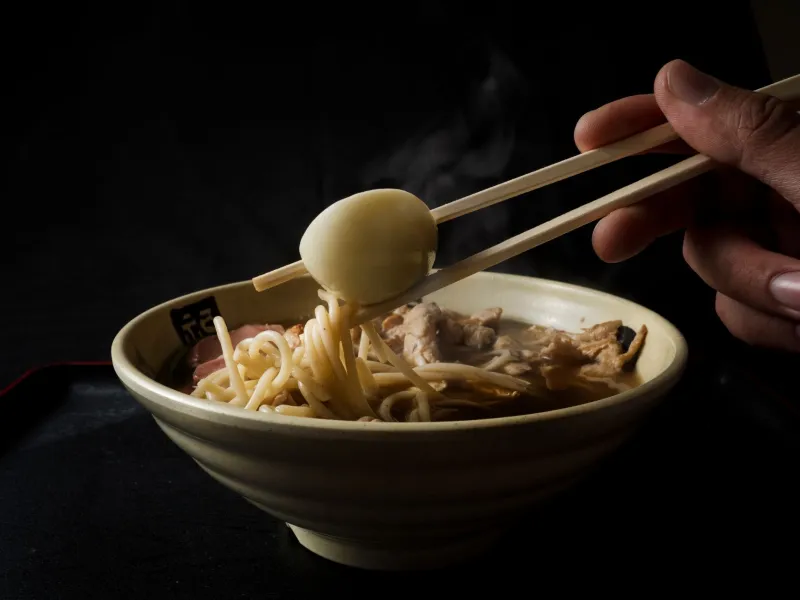
What's Really in That Bowl: The Obsessive, Multi-Day Science of Building a Perfect Ramen Broth
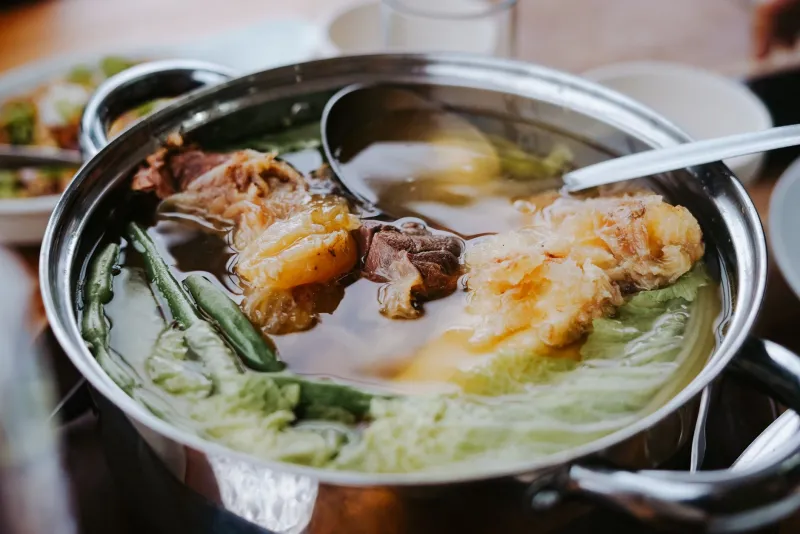
If you've ever stood in line for 45 minutes at a ramen shop and wondered whether the broth was worth it, the answer is almost certainly yes — and the reason has everything to do with time. Not technique shortcuts or secret ingredient hacks. Just time, heat, and an almost unreasonable commitment to flavor.
At Nat's Ramen, we spend a lot of time thinking about broth. Like, a lot. And the more we dig into how Japanese ramen masters approach their foundational stocks, the more we realize that the bowl you're slurping in under ten minutes represents days of someone else's work. That's worth understanding.
Let's talk about what's actually happening inside those giant pots — and how you can start building something genuinely great at home.
The Four Pillars: Tonkotsu, Shoyu, Miso, and Shio
Before we get into process, it helps to know what we're working with. Japanese ramen broth broadly falls into four regional and stylistic categories, each with a distinct personality.
Tonkotsu is the big, creamy, opaque one — the broth that turns milky white because of the way pork bones are boiled at a hard, rolling simmer for hours on end. The collagen breaks down, the marrow releases, and the fat emulsifies into something that coats your spoon like velvet. Fukuoka is its spiritual home, and the best versions are rich without being heavy, porky without being funky.
Shoyu (soy sauce-based) broths tend to be clearer and more delicate-looking, but don't mistake that for simplicity. They're typically built on a chicken or dashi foundation and seasoned with a carefully balanced tare — a concentrated seasoning sauce — that adds umami, salt, and a subtle sweetness. Tokyo-style ramen leans heavily shoyu.
Miso broths are the heartiest of the bunch, often associated with Hokkaido, Japan's northernmost island, where winters are brutal and bowls need to be warming. A fermented soybean paste tare is stirred into a stock base, creating something nutty, savory, and deeply complex.
Shio — which simply means salt — is the lightest and arguably most technically demanding of the four. Because there's nothing to hide behind, a shio broth lives or dies on the quality of its components. Clean chicken stock, good dashi, and a precisely calibrated salt tare. It should taste like the ocean and a chicken coop had a very elegant dinner party.
Why the Clock Matters More Than You Think
Here's the thing about broth shortcuts: they don't work. Not really. You can add MSG (which, for the record, is totally fine and widely used in Japan), and you can use a pressure cooker to speed things along, but you cannot replicate what happens to a bone over a long, slow simmer.
Collagen — found in cartilage, joints, and connective tissue — takes time to convert into gelatin. That gelatin is what gives a proper tonkotsu or chicken broth its body, its lip-sticking quality, that sense that the broth has weight to it. A stock that's only been going for two hours is thin and watery compared to one that's been simmering for twelve, eighteen, or even seventy-two hours.
Japanese ramen chefs talk about their broths the way some people talk about sourdough starters — with reverence, with a sense of ongoing relationship. Some shops in Japan have been using the same base pot, continuously refreshed, for decades. The broth is never fully discarded; it just keeps evolving.
At home, you're not going to maintain a 72-hour continuous boil. But even pushing your broth to the 8–12 hour range on a weekend will produce something categorically different from a 2-hour stock.
Building Your First Serious Broth at Home
You don't need a commercial kitchen or a Japanese grandmother looking over your shoulder. You need a big pot, good ingredients, and a free Saturday.
Start with the bones. For tonkotsu, you want pork trotters and neck bones — both available at most Asian grocery stores and many butcher shops. Blanch them first in boiling water for about 10 minutes, then rinse thoroughly under cold water. This removes impurities and keeps your broth cleaner.
Cover with cold water and bring to a boil. For tonkotsu specifically, you want a hard boil — this is what emulsifies the fat and creates that signature milky color. For chicken or shio-style broths, keep it at a gentle simmer to maintain clarity.
Don't neglect aromatics. Ginger, green onions, and garlic go into most Japanese broths at some point. They're not the star, but they round things out.
Make your tare separately. The seasoning sauce — whether it's soy-based, miso-based, or salt-based — should be made independently and added to each bowl individually. This lets you control saltiness per serving and keeps the broth versatile.
Taste constantly. Broth-making is an active process. It changes as it reduces, as the fat renders, as the gelatin releases. Check it every hour or two and adjust.
The Shortcut Myth (And What to Do Instead)
We've all seen the recipes that promise ramen broth in 30 minutes. And look, we're not here to judge — sometimes a weeknight is a weeknight. But if you're going to call it ramen broth, let's be honest about what it is: a flavored stock, not a developed broth.
The difference shows up in texture, in depth, and in that hard-to-name quality that makes you want to drink the last of the broth straight from the bowl. That quality takes time.
If you want a middle-ground approach, consider making a batch of proper broth on the weekend and freezing it in portions. A good tonkotsu or chicken broth freezes beautifully for up to three months. Future-you will be very grateful.
The Bigger Picture
Ramen broth is one of those things that rewards obsession. The more you make it, the more you tune into what's happening in the pot — how the smell changes, how the color shifts, when it's reached that point of deep, layered flavor that no store-bought stock can touch.
Japanese ramen culture is built on this kind of dedication. It's not about gatekeeping or making things unnecessarily complicated. It's about respecting what the ingredients can become when you give them enough time and attention.
Start simple. Make a batch. Taste it. Make another one and do something different. That's how every great ramen shop in Japan got where it is — one long, patient simmer at a time.