Ramen Gets Remixed: Inside America's Fusion Experiment — And Why Some of It Actually Works
If you spend any time in American food culture — scrolling through Instagram, wandering through a food hall in Nashville or Denver, reading the menus at the kind of restaurants that describe themselves as "globally inspired" — you've probably noticed that ramen has escaped the bowl.
Ramen burgers. Tonkotsu mac and cheese. Broth-braised short ribs. Ramen-spiced popcorn. At some point in the last decade, the flavors and techniques associated with Japanese noodle culture started showing up in places that would genuinely confuse anyone who grew up eating at a traditional ramen-ya in Fukuoka or Sapporo.
So: is this a problem? A celebration? Both?
The answer, like most things in food culture, is complicated — and a lot more interesting than a simple yes or no.
How We Got Here
American food culture has always had a complicated relationship with foreign culinary traditions. We adopt, we adapt, we sometimes mangle, and occasionally we stumble onto something genuinely great. Ramen's journey in the US follows that pattern almost perfectly.
For years, "ramen" in America meant the ninety-nine-cent brick in a foil packet. Then, starting roughly in the 2000s and accelerating through the 2010s, serious ramen culture arrived — first in coastal cities, then spreading inland. Americans started learning what tonkotsu actually was, what made a good tare, why the noodle texture mattered so much.
Once that knowledge base existed, it was only a matter of time before creative cooks started pulling it apart and reassembling it into new shapes. That's not unique to ramen. It's what happens when any culinary tradition gains enough traction in a new cultural context.
The Ramen Burger: A Case Study in Viral Fusion
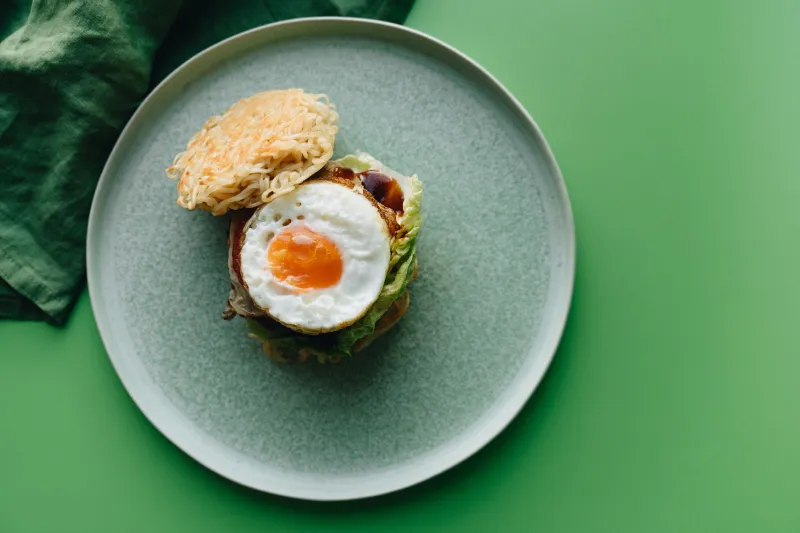
No single dish captures the American ramen remix moment quite like the ramen burger. If you missed it: in 2013, a food vendor at Smorgasburg in Brooklyn started selling burgers where the bun was replaced with compressed, pan-fried ramen noodles. It went viral almost immediately. Lines stretched around the block.
The reaction from traditional ramen enthusiasts ranged from bemused to genuinely annoyed. And honestly? Both reactions make sense.
On one hand, the ramen burger isn't really about ramen. It uses noodles as a structural gimmick — the "ramen-ness" of the dish is almost entirely visual. There's no broth, no tare, no consideration of the balance between fat, salt, and umami that defines actual ramen craft. It's a burger that happens to be wearing noodles as a costume.
On the other hand, it got a huge number of people curious about ramen who might not have been otherwise. Whether that curiosity translates into actually learning about the tradition is a different question — but the door opened.
Where Fusion Actually Adds Something
Not all ramen-inspired creativity is as surface-level as the noodle bun. Some American chefs are doing genuinely interesting work with Japanese broth-building techniques applied to non-ramen contexts.
Consider the growing number of American restaurants — particularly in cities with serious food scenes like Chicago, Portland, and Los Angeles — that are using dashi and kombu as foundational elements in dishes that have nothing to do with Japanese cuisine on the surface. A chef making a French-style potato leek soup with a dashi base isn't doing ramen, but they're applying an understanding of Japanese umami construction that directly traces back to noodle culture's influence on how American cooks think about broth.
That kind of cross-pollination is genuinely valuable. It deepens the American culinary vocabulary in ways that benefit everyone — including people who care deeply about traditional ramen.
What Traditionalists Are Actually Worried About
When purists push back against ramen fusion, the concern isn't usually about protecting some abstract cultural purity. It's more specific than that.
The worry is that when a watered-down or gimmick-driven version of a dish becomes the dominant cultural reference point, it crowds out understanding of the real thing. If the only "ramen" most Americans encounter is a tonkotsu-flavored seasoning packet on kettle chips, the actual craft of building a proper broth — the hours, the technique, the regional variation, the history — becomes invisible.
That's a legitimate concern. And it's not hypothetical. It already happened once with sushi, which spent decades in America as a vehicle for cream cheese and tempura crunch before serious omakase culture finally started getting mainstream attention.
Ramen is at a more interesting inflection point right now. The serious version and the gimmick version are both visible and competing for cultural space simultaneously.
The Home Cook Angle
For home cooks — which is a big part of who's reading this — the fusion question is actually pretty freeing. You're not running a restaurant or representing a culinary tradition professionally. You're cooking for yourself, your family, your friends.
Experimenting with ramen-inspired flavors in non-traditional contexts is how you learn. Making a tonkotsu-style broth and using it to braise pork shoulder instead of serving it with noodles isn't a betrayal of anything — it's a way of understanding what that broth is actually doing, what flavors it carries, how it behaves under different conditions.
The key distinction worth holding onto, whether you're a home cook or a restaurant chef, is the difference between drawing from a tradition with some understanding of what you're borrowing versus using it as pure aesthetic surface. Ramen-flavored Doritos aren't in conversation with Japanese noodle culture. A chef who has studied tare construction and is applying that knowledge in a new direction? That's a different story entirely.
So When Should Purists Actually Care?
Honestly? When the fusion obscures rather than illuminates. When a dish uses ramen as a brand rather than as a technique. When the commercial version of a thing becomes so dominant that the traditional version gets pushed to the margins.
But when a creative cook uses what they've genuinely learned from ramen culture to make something new — even something that doesn't look anything like a bowl of noodles — that's the tradition doing what culinary traditions have always done. It's spreading. It's influencing. It's alive.
Ramen culture in Japan didn't arrive fully formed either. It absorbed Chinese noodle techniques, adapted to regional ingredient availability, and kept evolving across decades. The American chapter of that story is still being written — and some of it, at least, is worth tasting.