Eating Your Way to Understanding: Why American Ramen Lovers Are Booking Flights to Tokyo
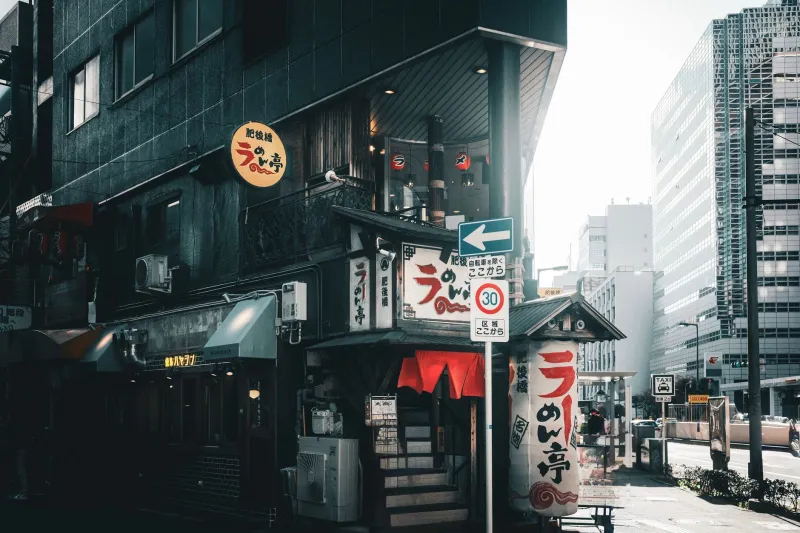
There's a particular kind of hunger that a bowl of ramen back home can't quite satisfy. Not because the broth isn't rich enough or the noodles aren't springy enough — sometimes they genuinely are. It's more like a nagging feeling that something deeper is missing. Context, maybe. History. The specific smell of a tiny shop tucked into a Tokyo alleyway at 11 p.m. on a Tuesday.
That feeling is what's been quietly driving a wave of American ramen fans to Japan. Not as casual tourists, but as something closer to pilgrims. They're going to eat, yes — but more than that, they're going to watch, to ask questions through translation apps and broken Japanese, and to bring something back that can't be vacuum-sealed in a carry-on.
The Pull of the Real Thing
Marcus Tillman, a line cook from Austin who made his first trip to Japan two years ago, describes the moment he sat down at a ten-seat counter in Shinjuku as a kind of recalibration. "I'd been making tonkotsu at the restaurant for about a year," he says. "I thought I had a handle on it. Then I watched this guy work and realized I'd been thinking about it all wrong. It wasn't just technique — it was attention. The way he treated every single bowl like it mattered equally."
That observation — that Japanese ramen culture is as much about a mindset as it is about a recipe — comes up again and again when you talk to Americans who've made the journey. The craft isn't just in the ingredients or the method. It's in the consistency, the quiet pride, the complete absence of shortcuts.
For home cook and food blogger Priya Nair from Chicago, the trip was less about studying a specific technique and more about expanding her frame of reference. "I went in expecting to come home with secrets," she laughs. "What I actually came home with was humility. These ramen masters have been doing this for twenty, thirty years. Some of them inherited the shop from their parents. You can't replicate that. But you can let it change how seriously you take your own cooking."
What the Alleyways Actually Teach You
Tokyo's ramen scene is famously dense. There are shops that specialize in a single style, served only at certain hours, to lines that form before the doors open. For an American visitor, the sheer specificity can be overwhelming in the best way.
What many travelers notice first is the regional identity baked into every bowl. A shop in Asakusa might serve a style rooted in the flavors of Hakata. Another in Shimokitazawa might be doing something experimental but still deeply tied to shoyu tradition. Every bowl is a conversation with where it came from.
Chef Dana Kowalski, who runs a small ramen pop-up in Portland, made a point of eating at least two bowls a day during her two-week trip. She kept a notebook. "I was tracking things like noodle thickness relative to broth weight, how much fat was sitting on the surface, the temperature the bowls were served at," she says. "It sounds obsessive, but that's kind of the point. You have to pay attention at that level to really absorb it."
She also spent time at a regional shop outside the city center, where the owner — a third-generation ramen cook — let her watch prep work for an afternoon. No formal lesson. Just observation. "He didn't speak much English and I don't speak Japanese, but I understood everything that mattered. The way he tasted the broth every twenty minutes. The way he adjusted. It was like watching someone have a conversation with the pot."
Bringing It Home Without Faking It
The tricky part, of course, is what happens when you land back at O'Hare or LAX with a head full of experiences and a kitchen that doesn't have access to the same water, the same wheat, or the same fifty-year-old copper pot.
Most of the cooks and home enthusiasts we spoke with were clear-eyed about this. The goal isn't to perfectly clone what they ate in Tokyo. It's to be informed by it.
"I came back and completely redid my tare," Marcus says. "Not because I had some secret formula — I didn't. But because I finally understood what I was actually trying to build with it. That clarity changed everything."
Priya started sourcing Japanese-style bread flour for her noodles and paying closer attention to the mineral content of her water. Small adjustments, but ones grounded in a new understanding of why they matter. "I'm not pretending I'm running a Tokyo ramen shop out of my apartment in Wicker Park," she says. "But I'm cooking with more intention now. That trip gave me that."
Dana's pop-up has evolved too. She's more confident about serving something simple — a clean shoyu broth, minimal toppings — without feeling like she needs to justify it. "American diners sometimes expect a lot of stuff piled in the bowl. Japan taught me that restraint is its own kind of skill. I'm still working on convincing people of that."
The Ramen Pilgrimage Is Just Getting Started
What's interesting about this trend is how grassroots it is. These aren't culinary school field trips or sponsored chef residencies. These are people saving up vacation days and flight miles because they genuinely care about getting it right.
Online communities have started organizing informal ramen tours — loosely structured itineraries shared across Reddit threads and Discord servers, built around specific shops and regional styles rather than tourist attractions. There are spreadsheets. There are Google Maps pins. There is, apparently, a very active debate about the best bowl in Fukuoka that has been running for three years.
It's a little obsessive. It's also kind of wonderful.
Ramen has always traveled well — from China to Japan, from Japan to the US, adapting and evolving with each new home. But the people making this pilgrimage aren't just chasing novelty. They're chasing understanding. And that, maybe more than any specific recipe or technique, is what comes back with them.
If you're thinking about making the trip yourself, start with a bowl somewhere local first. Eat it slowly. Notice what you don't know yet. Then book the flight.