Fewer Ingredients, Deeper Flavor: The Surprising Science Behind Minimalist Ramen Broth
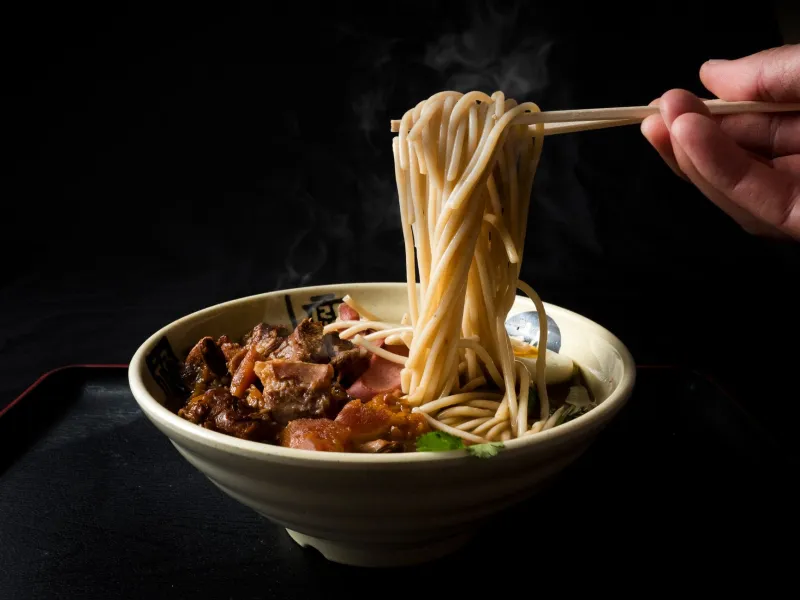
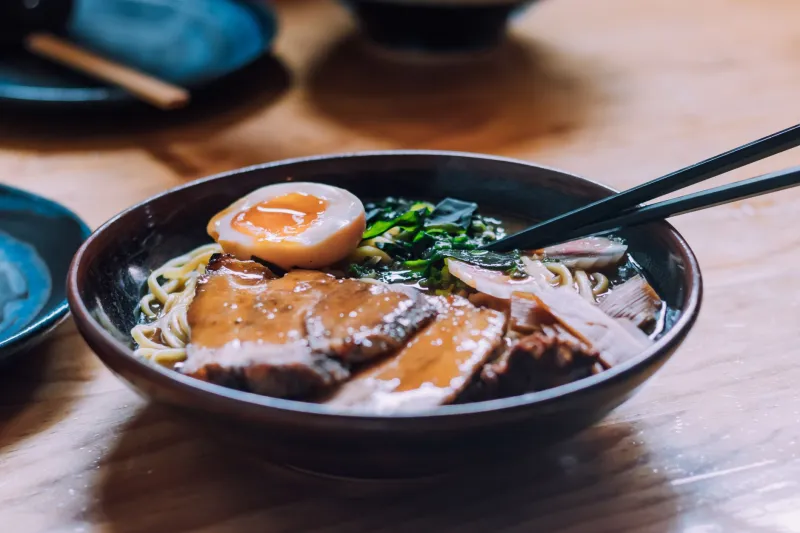
There's a bowl of shio ramen at a tiny shop in Kyoto that stops people mid-sentence. Not because it's loaded with rare ingredients or because the chef spent 72 hours coaxing flavor from a mountain of bones. It stops people because it tastes, somehow, like everything — clean, deep, and impossible to fully describe. The broth is made with four ingredients. Four.
This is the paradox that keeps serious ramen cooks up at night.
We've been taught — by food culture, by cooking shows, by the general mythology of the restaurant kitchen — that complexity comes from accumulation. More ingredients, more time, more technique. But ramen has a quiet way of flipping that assumption on its head. And once you see it, you can't unsee it.
The Noise Problem in a Crowded Broth
Think about what happens when a dozen flavors compete for your attention at once. Your palate doesn't experience them as a harmonious whole — it experiences something closer to static. Chefs who've spent time studying traditional Japanese broth-making often use the word "muddy" to describe what over-engineered broths can taste like, even when every individual component is technically excellent.
"When I was first learning, I thought the goal was to keep adding," says Marcus Lim, a ramen chef based in Chicago who trained in Japan for two years. "More aromatics, more bones, more time. And then I had a bowl in a shop in Fukuoka where the master used almost nothing — and it was the most focused, precise flavor I'd ever tasted. I had to completely rethink what I was doing."
The culinary concept at work here is sometimes called flavor masking. When you introduce too many competing taste compounds, they don't simply add together — they interfere with each other. Certain flavor molecules literally block taste receptors that would otherwise pick up on subtler notes. A broth with forty ingredients might actually be suppressing some of its own best qualities.
What Japanese Tradition Already Knew
This isn't a new discovery. Japanese culinary philosophy has long prized the idea of ma — a concept that roughly translates to meaningful space or purposeful absence. In cooking, it shows up as the discipline to leave room for individual ingredients to breathe and be perceived on their own terms.
Traditional shio and shoyu broths in particular were developed in a cultural context that valued clarity — not just visual clarity in the bowl, but clarity of flavor. The goal was never to overwhelm. It was to present something clean and intentional that revealed the quality of its ingredients rather than hiding behind volume.
Kenji Watanabe, a third-generation ramen shop owner in Sapporo whose family has been making the same miso broth for decades, puts it plainly: "My grandfather always said that a broth should taste like what it is. If you use good chicken, it should taste like good chicken — not like twenty other things you added to make it seem more impressive."
That kind of confidence — the confidence to let a single ingredient carry a bowl — is genuinely hard to develop. It requires knowing your ingredients well enough to trust them.
The American Overcorrection
When ramen started its serious American expansion in the 2010s, a lot of early chefs came from fine dining backgrounds where complexity and technique were the primary signals of quality. The result was some genuinely spectacular bowls — and also a tendency toward what you might call maximalist broth-building. Multi-day processes, obscure umami additives, layered tare constructions that required spreadsheets to track.
Some of that experimentation produced genuinely great ramen. But it also produced bowls where the broth tasted impressive for thirty seconds before becoming exhausting — where the initial hit of flavor didn't have anywhere interesting to go.
"There's a difference between depth and density," says Priya Okonkwo, a ramen chef in Portland who's been publicly working through a project she calls her "subtraction experiments" — systematically removing ingredients from her signature broth to find the point where flavor actually peaks. "I kept expecting things to fall apart as I removed components. Instead, the broth kept getting cleaner and more interesting. I pulled out an ingredient I'd been using for years and suddenly I could taste things I didn't know were in there."
Her current chicken shio broth uses six ingredients. It's the best-reviewed bowl she's ever made.
Why Restraint Is Actually Harder
Here's the thing nobody tells you: making a minimalist broth is significantly more difficult than making a complex one. When you have forty ingredients, mediocre components can hide behind good ones. When you have four, there is nowhere to hide.
The quality of your water matters. The freshness of your bones matters. The temperature at which you extract matters. Every variable is exposed. A multi-day tonkotsu can absorb a lot of small mistakes. A three-ingredient shio cannot absorb any.
This is partly why minimalist broths became associated with mastery in Japan rather than with beginners. Stripping a recipe down isn't a shortcut — it's a test. It forces you to understand your ingredients at a level that elaborate recipes never demand.
Lim describes it as learning to listen: "A complex broth is loud. You're always reacting to it, adjusting it, adding to compensate for something. A simple broth is quiet. You have to get very still and pay attention to what it's actually telling you."
Finding the Floor, Not the Ceiling
For home cooks, there's a practical takeaway buried in all of this. The instinct when a broth tastes flat is to add something — more soy, more mirin, another piece of kombu. Sometimes that's right. But sometimes the better move is to step back and ask whether you've already added too much.
Try making a broth with half the ingredients you normally use. Use better versions of those ingredients. Give them time and heat and attention. Taste it without the tare first, without the noodles, without anything else in the bowl. Just the broth, in a small cup, at the temperature you'd actually serve it.
You might be surprised by what you find.
The ramen paradox isn't really a paradox once you sit with it. Complexity isn't the same as complication. The most complex flavors often come from the most focused sources — a single great dashi, a carefully made chicken stock, a broth that knows exactly what it wants to be.
Sometimes the most powerful thing a cook can do is decide what not to add.