The Forgotten Pantry: Rare Japanese Ingredients That Are Quietly Changing American Ramen
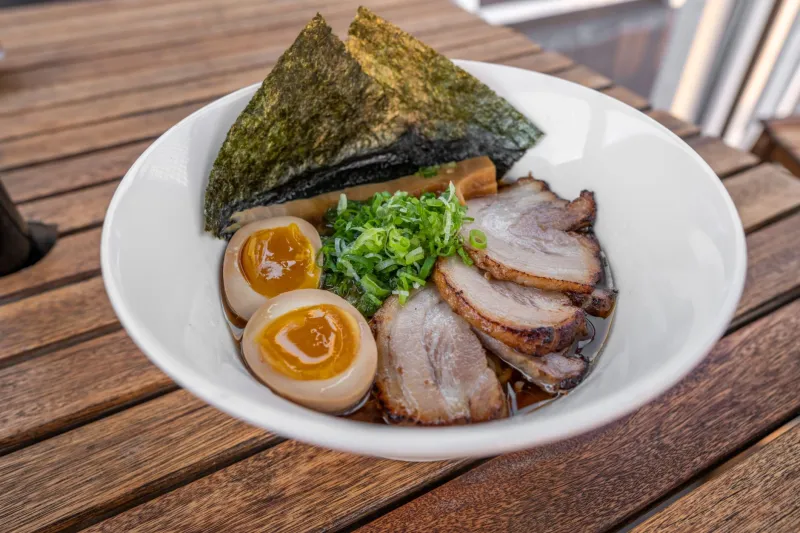
For most of its American life, ramen has been defined by a pretty short list of flavors. Tonkotsu, with its rich pork bone depth. Shio, clean and restrained. Shoyu, savory and familiar. Miso, earthy and warming. These four styles became the shorthand — the menu categories that American diners learned to navigate, the benchmarks against which every bowl got measured.
But something is shifting in kitchens from Seattle to Nashville. A smaller, more research-obsessed generation of ramen chefs is reaching further back into the Japanese pantry, pulling out ingredients that even many Japanese home cooks rarely encounter. The results are broths that don't fit neatly into any category — and flavor profiles that are genuinely rewriting what American diners expect from a bowl of ramen.
Beyond Kombu: The World of Seaweed You've Never Tasted
Ask most ramen cooks about kombu and they'll point you to the standard dried kelp available at any Japanese grocery. It's a foundational dashi ingredient — mild, umami-forward, essential. But kombu isn't a monolith.
Japan produces several distinct regional varieties, each with a meaningfully different flavor profile. Rishiri kombu, harvested from the waters off Hokkaido's northern coast, produces a delicate, almost floral dashi prized in Kyoto cuisine for its clarity and refinement. Ma-kombu, also from Hokkaido, is thicker and more intensely savory. Naga-kombu brings a sweeter, gentler character. Then there's Hidaka kombu, softer and faster-extracting, which has historically been the workhorse of everyday Japanese cooking.
"Most American ramen shops are using whatever kombu they can get consistently," says chef Kenji Arita, who runs a small ramen counter in Portland. "When I switched to Rishiri for my shio broth, it completely changed the top notes. There's a brightness that you just don't get from standard kombu. Guests noticed without knowing why."
Sourcing these varieties in the US has historically been the challenge, but a growing network of Japanese specialty importers — and a few dedicated online retailers — has made it more feasible for chefs willing to pay the premium and plan ahead.
Miso Is a Region, Not Just a Flavor
The American ramen menu typically offers "miso ramen" as a single category, as if miso were one thing. In Japan, it is emphatically not.
Miso production in Japan is deeply regional, shaped by local soybeans, local water, local fermentation traditions, and the particular microcultures of specific breweries — some of which have been operating for centuries. Sendai miso from Miyagi Prefecture is bold, long-fermented, and deeply complex. Shinshu miso from Nagano is lighter, younger, and more approachable. Hatcho miso from Aichi Prefecture — made exclusively from soybeans, aged for years in enormous cedar casks — is so intense and savory it can be almost shocking to taste straight.
Food historian and culinary consultant Yuki Takahashi, who advises several American Japanese restaurants, frames it this way: "When you use Hatcho miso in a broth, you're tasting something that carries hundreds of years of specific regional knowledge. It doesn't taste like 'miso.' It tastes like a place."
A handful of American ramen chefs have started building tare specifically around single-origin misos — treating them the way a sommelier treats wine, with attention to provenance and pairing. At a restaurant in Chicago's Logan Square neighborhood, one chef has built an entire seasonal menu around rotating miso varieties sourced directly from small Japanese producers, changing the featured miso as new batches arrive.
The Seafood Dimension Most Americans Haven't Met Yet
Niboshi — small dried sardines — have long been a cornerstone of certain Japanese ramen styles, particularly in Tokyo and parts of eastern Japan. Their flavor is assertive, almost aggressively fishy in raw form, but when extracted carefully into a broth, they contribute a complex brininess and depth that's completely distinct from any pork or chicken base.
But niboshi are just the beginning of a much larger world of traditional Japanese dried seafood ingredients that are now finding their way into American ramen kitchens.
Dried flying fish (ago), traditionally used in broths from Nagasaki Prefecture, offer a lighter, sweeter seafood note. Dried scallop (hotate) brings an extraordinary sweetness and oceanic roundness. Sababushi — dried mackerel shavings, similar in concept to the bonito flakes most Americans know but with a more pronounced, oily richness — can add a completely different register of umami to a dashi-forward broth.
"I think of it like building a chord," says chef Amara Solis, whose ramen popup in Los Angeles has developed a following for its intricate seafood-forward broths. "Katsuobushi is one note. Add niboshi and you have two. Bring in ago and hotate and suddenly you have this full, layered sound that you can't quite identify but can't stop listening to."
Solis sources her dried seafood through a combination of Japanese importers and, when possible, directly from Japanese fishery cooperatives that have begun exporting to the US market.
Why This Matters Beyond the Bowl
There's a bigger conversation embedded in all of this. For years, American ramen existed in a kind of comfortable shorthand — a simplified version of a deeply regional, historically complex Japanese culinary tradition. That shorthand served a purpose: it made ramen accessible, legible, and popular in a market that was just learning the dish.
But accessibility has a ceiling. At some point, a cuisine that's reduced to four flavor categories stops telling the full story. What the ingredient-forward chefs are doing — sourcing Rishiri kombu, fermenting regional misos, building seafood broths from ago and hotate — is essentially an act of translation. They're trying to bring more of the actual story to American diners.
Takahashi is optimistic about what this means long-term. "Japanese ramen culture is already hyper-regional and constantly evolving," she notes. "The fact that American chefs are now engaging with that regional complexity — not just the greatest hits — suggests that ramen here is finally maturing as a culinary tradition in its own right."
What to Order (and Ask) When You're at the Bowl
If you want to start encountering these flavors yourself, here's a practical guide:
- Ask your server about the dashi base. A chef who's using specific kombu varieties or unusual dried seafood will usually be happy to talk about it. If they look blank, that tells you something too.
- Seek out seafood-forward ramen. Many shops that experiment with lesser-known ingredients express it through their "fish" or "shio" options. These are often where the most interesting broth work is happening.
- Look for single-origin miso menus. A few American shops have started noting miso provenance on their menus the way wine lists note a vineyard. This is a very good sign.
- Pay attention to the finish. The lingering aftertaste of a broth built on rare ingredients tends to be more complex and longer-lasting than a standard base. If you're still tasting the bowl two minutes after you've swallowed, something interesting probably went into it.
The American ramen story is still being written. But the chefs reaching into Japan's forgotten pantry are making sure the next chapter is a lot more interesting than the last.