Fast Broth, Big Flavor: The Case for Breaking Ramen's Long-Cook Rules
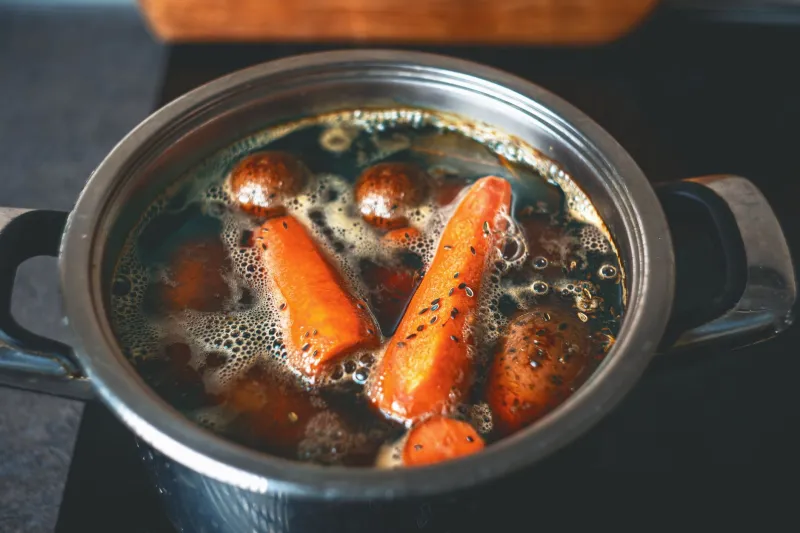
There's a kind of mythology that surrounds ramen broth in America. Walk into any serious ramen shop from Nashville to Seattle, and you'll almost certainly find a chalkboard or a menu note proudly announcing something like "72-hour broth" or "simmered overnight." Time, in the world of ramen, has become a proxy for quality. The longer the cook, the better the bowl — or so the story goes.
But spend a little time talking to the people who actually obsess over this stuff, and a different picture starts to emerge. It turns out that more hours don't automatically translate to more flavor. In fact, for certain components of a ramen bowl, speed isn't just acceptable — it's genuinely superior.
Where the Long-Cook Myth Comes From
To be fair, the reputation of slow-cooked ramen broth isn't baseless. Tonkotsu, the creamy pork bone broth that put Hakata-style ramen on the global map, really does benefit from aggressive, extended cooking. The high heat and long duration break down collagen into gelatin, emulsify fat, and drive that signature milky-white color. You cannot rush a proper tonkotsu. The chemistry won't cooperate.
The same logic applies to any broth built primarily on connective-tissue-rich bones — trotters, knuckles, necks. These cuts need time because collagen doesn't fully convert to gelatin until it's been held at temperature for several hours. Pull the pot too early and you end up with thin, greasy liquid instead of that luxurious, coating mouthfeel that makes the style so compelling.
So yes, for tonkotsu purists, the slow-cook gospel holds. But ramen is a much bigger universe than one style.
The Science of Knowing When to Stop
Here's where things get interesting. Protein denaturation — the process by which heat unravels proteins and changes their structure — doesn't follow a simple "more is better" curve. After a certain point, extended cooking can actually degrade flavor compounds rather than develop them.
Chicken-based broths are a perfect example. A classic tori paitan (creamy chicken broth) reaches its flavor peak well before the six- or eight-hour mark that some recipes suggest. Push past that window and you start extracting bitter, sulfurous notes from the carcass. The sweet, rounded quality that makes a great chicken broth so approachable begins to flatten and turn muddy.
Chef Marcus Yuen, who runs a small ramen counter in Chicago, learned this the hard way during his first year in business. "I was convinced longer was always smarter," he says. "Then I started doing side-by-side tests with my chicken broth at four hours versus eight hours. The four-hour version was cleaner, brighter, way more alive. I felt kind of embarrassed that I'd been overcooking it for months."
Yuen now pulls his tori paitan at the four-and-a-half-hour mark, every time. His bowls are consistently some of the most talked-about in his neighborhood.
When Modern Equipment Changes the Equation
Pressure cookers — and their sleeker descendant, the Instant Pot — have complicated the slow-cook debate even further. By raising the boiling point of water above 212°F, pressure cooking accelerates collagen extraction dramatically. What might take eight hours on a stovetop can happen in under two under pressure.
The results aren't always identical to traditional methods, and some chefs are adamant that pressure-cooked broth has a slightly different character — less nuance, they argue, in the aromatics. But for home cooks in the US who can't dedicate a full Saturday to a stockpot, the quality-to-time ratio of a pressure-cooked pork broth is genuinely hard to argue with.
Korin Sato, a culinary instructor based in Portland who teaches Japanese cooking technique, has incorporated pressure cooking into her ramen curriculum deliberately. "I used to resist it because it felt like cheating," she admits. "But when I actually tasted results side by side, I had to acknowledge that a two-hour pressure-cooked broth was beating some of my students' six-hour stovetop attempts. The extraction is just more efficient."
The key, Sato emphasizes, is knowing which broths respond well to pressure and which don't. Delicate seafood-based broths, like niboshi (dried sardine) or katsuobushi (bonito flake) dashi, absolutely do not want pressure or extended heat. These are flash-infusion situations — steep too long and you're drinking bitterness, not umami.
The Tare and Aroma Oil Advantage
One of the most overlooked arguments for speed in ramen is what happens outside the broth. The tare — the concentrated seasoning sauce that actually carries much of a bowl's personality — and the aroma oil layered on top are both components where quick, high-heat cooking produces superior results.
A good mayu (blackened garlic oil) takes minutes, not hours. Toasted sesame oil, scallion oil, and chicken fat rendered over high heat all develop their best flavor characteristics quickly. Extend the cooking time on these components and you cook off the volatile aromatic compounds that make them interesting in the first place.
This is why experienced ramen cooks think of the bowl as a system with different timing requirements for each part. The broth might need hours. The tare might need twenty minutes. The aroma oil might need five. Treating everything as if it belongs on the same timeline is one of the most common mistakes home cooks make.
Reading the Room (and the Recipe)
So how do you actually apply this in your own kitchen? A few practical takeaways:
Match the technique to the style. If you're going for tonkotsu or a rich jiro-style broth, commit to the long cook. If you're working with chicken, seafood, or vegetable bases, build in tasting checkpoints at shorter intervals and trust your palate over the clock.
Don't ignore your pressure cooker. For pork-based broths especially, it's a legitimate shortcut that doesn't meaningfully compromise the final product for most home applications.
Treat your tare and oils as separate projects. Don't assume they need the same time investment as the broth. Quick, attentive cooking often produces better results for these components.
Taste early and often. This sounds obvious, but the number of home cooks who set a timer and walk away for six hours without checking in is genuinely alarming. Your broth is telling you things. Listen to it.
Rethinking What Patience Actually Means
The deeper lesson here isn't really about speed versus slowness — it's about intentionality. The best ramen cooks aren't just patient; they're precise. They understand what each component needs and give it exactly that, no more and no less.
Sometimes that means standing watch over a pot for the better part of a day. Sometimes it means pulling a broth off the heat earlier than you expected because it's already where it needs to be. The goal was never time for its own sake. The goal was always the bowl.
And occasionally, the bowl comes together faster than tradition would have you believe. That's not a shortcut. That's just good cooking.