Hurry Up and Wait: The Japanese Ramen Secret That Makes You a Better Cook in Less Time
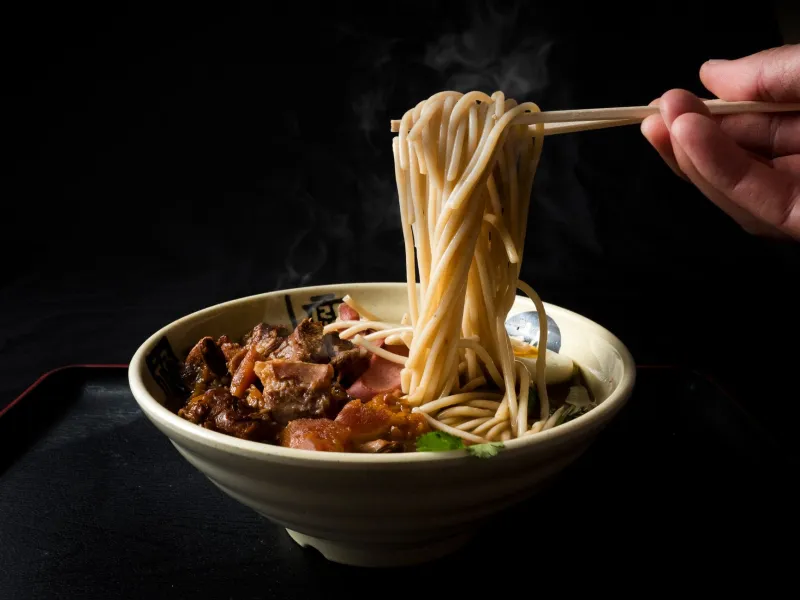
There's a moment that happens to almost every home cook who tries ramen for the first time. You've blocked off a Saturday, you've got your pork bones or your chicken carcasses, and somewhere around hour three you start wondering if all this time is actually doing anything. The broth looks the same as it did an hour ago. You crank the heat. Things start to boil harder. Surely faster means better, right?
Wrong. And that instinct — the American reflex to equate speed with progress — is exactly what separates a decent homemade ramen from a genuinely great one.
Here's the paradox: the cooks who make ramen fastest, who can pull together a bowl that tastes like it simmered for twelve hours in under three, are the ones who've mastered the art of slowing down at precisely the right moments. Deliberate restraint isn't the opposite of efficiency in Japanese cooking. It is efficiency.
Why Your Fat Is Telling You to Back Off
Let's start with rendered fat, because this is where most home cooks lose the plot almost immediately.
When you're building a tare — that concentrated seasoning base that defines so much of ramen's character — or when you're working with chicken fat (schmaltz-adjacent stuff that Japanese cooks call tori abura), the temptation is to get the pan hot and push things along. You want results. You're hungry. The clock is ticking.
But fat rendered at low temperature behaves completely differently than fat rendered fast. Low and slow fat rendering — we're talking medium-low heat, sometimes as gentle as you'd use to warm milk — produces a cleaner, more aromatic result. The fat molecules break down without scorching the proteins clinging to them, which means you get pure flavor without bitterness. Japanese ramen shops that make their own flavored oils spend a long time on this step. Not because they have to. Because it's faster in the long run — you're not correcting for burnt notes later.
The practical takeaway: when a recipe tells you to render fat gently, it's not being precious. It's saving you from having to start over.
Cold Water Starts and What They're Actually Doing
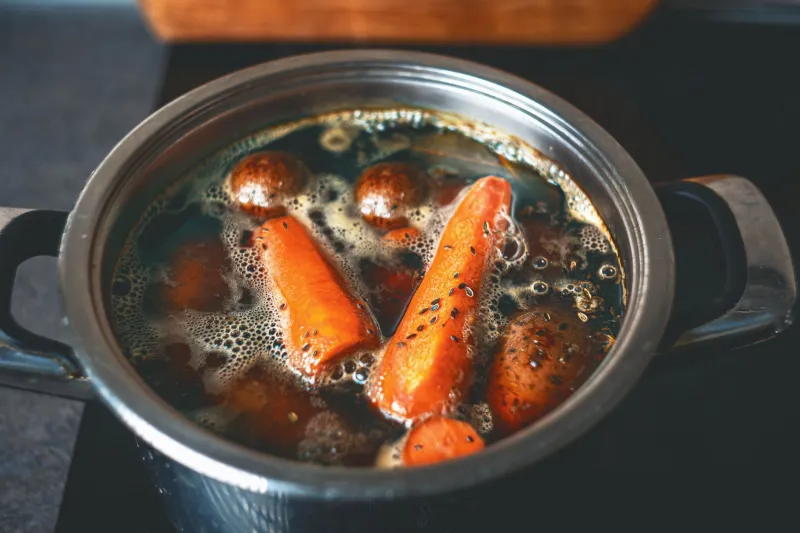
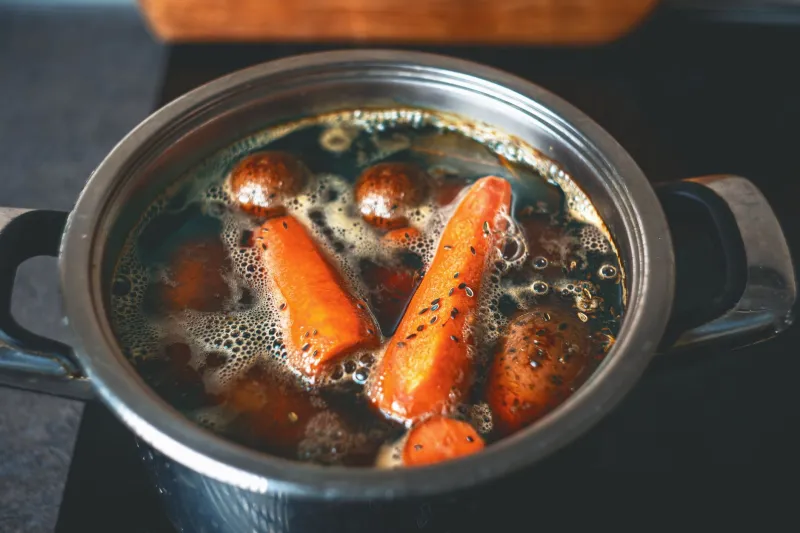
Here's another one that feels counterintuitive until you understand the mechanics. Starting your bones in cold water — bringing everything up to temperature together rather than dropping bones into boiling water — is a technique that seems to add time. You're waiting for the pot to come to temperature. Isn't that wasteful?
Not even a little.
When you start cold, the proteins in the bones release gradually. The albumin and other water-soluble proteins that would otherwise turn into gray, bitter foam in boiling water have time to leach out and get skimmed before they cook into the broth. You end up with a cleaner liquid that requires less work to clarify. Cooks who skip this step spend significantly more time skimming, straining, and sometimes just accepting a cloudier, less refined result.
The cold-water start also matters for noodle texture, though in a different way. If you're making fresh noodles or even rehydrating dried ones, understanding that different temperatures unlock different textures is the kind of knowledge that makes you cook faster because you stop troubleshooting. You're working with the ingredient instead of fighting it.
Strategic Timing Breaks That Actually Build Flavor
This one is maybe the most surprising thing ramen masters do that home cooks almost never replicate: they stop.
Not because they're tired or distracted. Deliberately. Intentionally. They pull the broth off the heat, let it sit, and come back to it.
Resting broth — even for twenty or thirty minutes — allows fat to rise and flavors to settle in a way that continuous cooking doesn't replicate. The broth's temperature drops to a range where certain chemical reactions actually continue developing flavor without the disruption of active boiling. Japanese cooks have known this for generations. Food scientists have been catching up to explain why it works, but the technique predates the explanation by a long time.
For home cooks, this is genuinely liberating news. It means your ramen broth can be a background project. You can start it, bring it up, skim it, drop it to a bare simmer, and then walk away. Come back. Rest it. Return to it. The broth is not suffering from your absence. In many cases, it's improving.
The American Kitchen Problem
American cooking culture — and this isn't a criticism, just an observation — is deeply oriented around visible activity. If something is happening in the pot, we feel productive. If it's just sitting there, we feel like we're wasting time.
Japanese culinary tradition operates on a different logic. The pause is part of the technique. Waiting is a skill. Knowing when not to stir, when not to add heat, when to simply observe and let the process run — that's considered real cooking knowledge, not laziness.
Ramen is a perfect lens for this because it's a dish that punishes impatience so visibly. Over-boiled tonkotsu turns milky and thick because of vigorous boiling — which is actually intentional for that style — but the same vigorous boiling in a delicate shio broth destroys the clarity you're working toward. Knowing which technique serves which goal, and having the patience to apply it correctly, is the whole game.
What Restraint Actually Looks Like in Practice
So what does this look like on a real Saturday afternoon when you're trying to make a solid bowl of ramen?
It looks like setting up your cold-water bone start and then making your tare over low heat while you wait for the pot to come up. It looks like skimming carefully during that first boil, then dropping the heat to a simmer and not touching it for an hour. It looks like tasting your broth at the ninety-minute mark not to see if it's done, but to understand where it is — what it needs, what it's already doing well.
It looks like building your toppings during those resting periods instead of hovering over the pot. Your chashu pork can braise while the broth rests. Your soft-boiled eggs can marinate overnight because you had the foresight to make them the day before. Everything has a window, and learning to stack those windows is how experienced ramen cooks compress a sixteen-hour restaurant process into a manageable home kitchen project.
The Patience Dividend
Here's what nobody tells you when they talk about ramen being a long cook: the time investment front-loads. Once you understand these techniques — once patience becomes your default mode rather than something you have to force — your active cooking time actually drops significantly. You're not correcting mistakes. You're not re-straining cloudy broth. You're not wondering why your noodles turned to mush.
You cooked slowly at the right moments. Everything else got faster.
That's the ramen paradox. And once it clicks, you'll never look at a bowl of broth the same way again.