Less Is Harder: The Brutal Truth About Mastering Simple Ramen
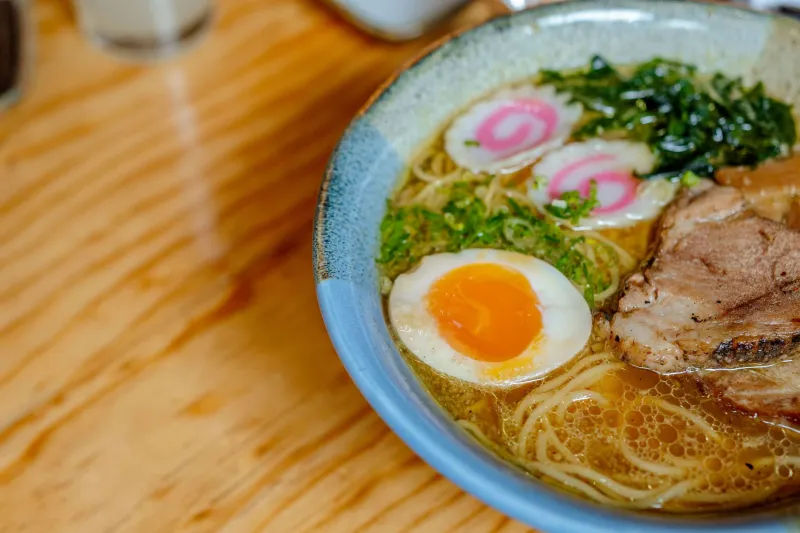
There's a bowl on the menu at a small ramen shop in Portland that stops people mid-bite. It's not loaded with toppings. There's no truffle oil, no sous vide pork belly fanned out like a deck of cards. It's just noodles, broth, a single slice of chashu, and a soft egg. Regulars describe it as "clean" or "pure" — words that somehow feel both accurate and completely inadequate.
The chef behind it, Marcus Okafor, spent three years in Japan before opening the shop. He'll tell you, without any trace of false modesty, that the bowl took him longer to figure out than anything else on the menu. Longer than the spicy miso. Longer than the rich, cloudy tonkotsu. That deceptively simple bowl of shoyu ramen — the one that looks like it should take twenty minutes to throw together — nearly broke him.
"Simple is where you have nowhere to hide," he says. "Every flaw in your broth is right there on the surface. There's nothing to cover it up."
The Illusion of Effortlessness
American diners have a complicated relationship with simplicity in food. We're trained, to some degree, to equate complexity with value — more toppings, more layers, more going on. When a bowl of ramen shows up looking minimal, there's sometimes a flicker of disappointment, like maybe you ordered wrong.
But in Japan, the most celebrated ramen shops are often the ones doing the least, visually speaking. A clear chintan broth, so transparent you can see the bottom of the bowl. Noodles that coil just so. A tare seasoned with such precision that it elevates without announcing itself. The restraint is the craft. And that restraint, as it turns out, is ferociously difficult to execute.
The paradox is real: the fewer elements you're working with, the more each one has to carry. In a complex bowl, a slightly off broth gets softened by bold toppings, aggressive seasoning, or the sheer volume of flavors competing for attention. In a minimal bowl, that same broth is all you've got. It either lands or it doesn't.
What Minimalism Actually Demands
Lena Choi, who runs a ramen counter in Chicago's Logan Square neighborhood, puts it plainly: "When I was learning to cook, I thought simple meant beginner. Now I know it means expert."
She spent time staging at restaurants in Tokyo and Fukuoka before coming back to the States, and what struck her most wasn't the elaborate preparations — it was watching veteran cooks obsess over the smallest adjustments. The temperature of the water before the kombu went in. The exact moment to pull the katsuobushi. The way a master tasted broth not just with his mouth but with his whole face, processing it slowly before deciding anything needed to change.
"It looked like nothing was happening," she says. "But so much was happening."
That invisible labor is central to what makes minimalist ramen so demanding. The techniques aren't showy. You're not torching anything or using a centrifuge. You're paying attention — to heat, to time, to the way ingredients interact when there's nothing else in the pot to distract from them.
For Choi, the hardest lesson was learning to stop adding things when something tasted off. "My instinct was always to fix a problem by putting something in. More salt, another aromatics, a splash of this. But sometimes the answer is just to do less. To wait. To trust the process."
That kind of restraint doesn't come naturally. It takes years of making mistakes with complex recipes before you develop enough of a palate — and enough humility — to simplify.
Why Complexity Is the Training Ground
Here's something that might seem counterintuitive: most of the chefs who cook the simplest ramen started by going deep into complexity. They layered broths, experimented with multiple tare styles, piled on toppings. That wasn't wasted time. It was essential education.
Okafor describes it as learning a language by reading difficult texts before you can write a simple sentence with real meaning behind it. "You have to understand what everything does before you know what to leave out," he says. "Otherwise you're not being minimal — you're just being incomplete."
There's a difference between a bowl that's simple because the cook hasn't figured out how to make it complex, and a bowl that's simple because the cook has figured out exactly what it doesn't need. Diners can usually taste that difference, even if they can't articulate it.
The ramen world in Japan has a term that gets used a lot in these conversations: hikizanzan, loosely meaning subtraction. The idea that mastery involves knowing what to remove. It's a concept that shows up across Japanese arts and craftsmanship, and ramen is no exception. You add until you understand, then you subtract until it's right.
The Long Road to One Good Bowl
What makes this especially challenging in the American ramen scene is that there's no standardized path to that kind of mastery. In Japan, young cooks often spend years — sometimes a decade — working under a single master before they're trusted to make any significant decisions about a recipe. Here, the timeline is compressed and the resources are scattered.
Chefs like Okafor and Choi have had to build their own curricula, cobbling together time in Japan with obsessive home experimentation and peer-to-peer knowledge sharing. The American ramen community is generous in that way — there's a culture of people sharing what they've learned, maybe because so many of them know how hard the learning was.
But even with all of that, both chefs are quick to say they're still figuring things out. Okafor's shoyu bowl — the one that stops people mid-bite — gets tweaked regularly. Not dramatically, not in ways most customers would notice. But he notices. A slightly different ratio in the tare. A shorter steep time on the dashi. Small moves that, in a more complex bowl, would be invisible.
In this bowl, they matter completely.
The Bowl That Asks Everything of You
There's something almost philosophical about what minimalist ramen demands from a cook. It asks you to be confident enough to strip everything away, and humble enough to know that what remains has to be perfect. That's a hard place to live, professionally speaking.
But the chefs who get there — who can put a bowl in front of you with five components and make you feel like you're tasting something profound — have earned something that no amount of elaborate technique can substitute for. They've learned to make simplicity look easy, which is the hardest trick in cooking.
The next time you sit down to a bowl that looks almost plain, take a slow first sip of the broth before you do anything else. Think about how long it took someone to make it taste like nothing happened at all.