You're Tasting Ramen Wrong — And It's Not Your Fault
Let's be honest: most of us in the US grew up learning four tastes. Sweet, salty, sour, bitter. We got quizzed on them in middle school science class, mapped them onto a little tongue diagram, and moved on. Nobody mentioned umami. Nobody handed us a bowl of dashi and said, pay attention to what's happening in the back of your mouth right now.
And that gap — that missing piece of flavor vocabulary — is exactly why so many American ramen lovers can finish a transcendent bowl of shio ramen and describe it as "really clean" or "kind of light" without being able to articulate what made it extraordinary. Meanwhile, a Japanese diner sitting at the same counter might describe the same broth in layered, specific terms: the depth from the kombu, the brightness from the katsuobushi, the way it lingers differently than a chicken-forward stock.
Neither person is wrong. But one of them is tasting more of the bowl.
What Umami Actually Is (And Why It's Slippery)
Umami — loosely translated as "pleasant savory taste" — was identified by Japanese chemist Kikunae Ikeda back in 1908. He was eating tofu soup with kombu broth and noticed a flavor he couldn't categorize. After isolating the compound responsible, he named the sensation umami and identified glutamate as its primary driver.
Here's where it gets tricky for Western palates: umami doesn't announce itself the way sweetness or saltiness does. It doesn't hit you upfront. It's more like a slow pressure — a coating, a roundness, a sense that the flavor in your mouth is continuing after you've swallowed. Japanese culinary culture has centuries of vocabulary and practice built around recognizing that sensation. American food culture, for the most part, does not.
We experience umami all the time — in parmesan cheese, ripe tomatoes, soy sauce, mushrooms, aged meats. But we tend to describe those foods as "rich" or "savory" or "deep" without naming the specific mechanism. In ramen, that mechanism is doing most of the heavy lifting, and if you can't identify it, you're essentially tasting with one eye closed.
Why Ramen Is the Ultimate Umami Delivery System
A well-made ramen broth is, at its core, a precisely engineered umami stack. Every component is doing something specific.
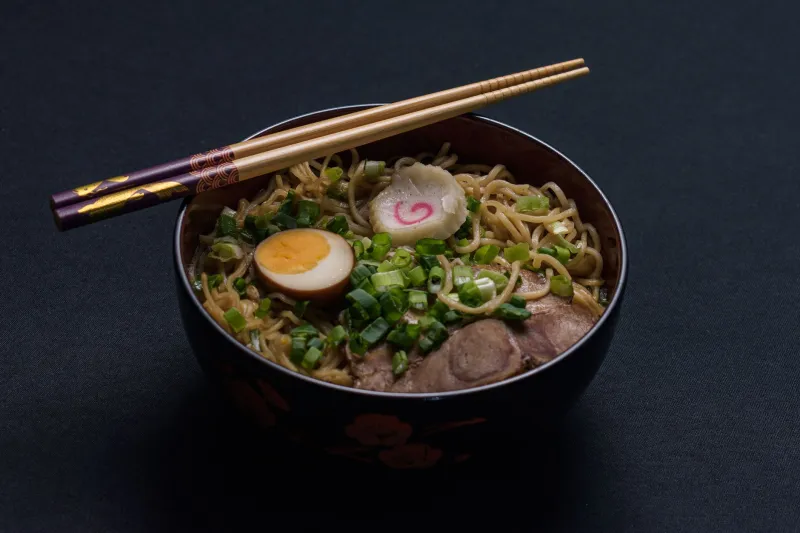
Kombu (dried kelp) brings glutamates — the foundational umami building block. Katsuobushi (dried bonito flakes) adds inosinate, a different umami compound that amplifies glutamate when they're combined. That synergy isn't accidental; it's the reason dashi tastes more complex than the sum of its parts. Add in the tare — the concentrated seasoning base that might include fermented miso, soy sauce, or salt — and you've got another wave of glutamates and other savory compounds layering in. Then the toppings: chashu pork, soft-boiled egg, nori, bamboo shoots. Each one contributes.
A Japanese ramen chef thinks about all of this deliberately. An experienced Japanese diner has spent a lifetime learning to taste those layers. An American diner who grew up eating mostly sweet-salty-sour flavor profiles is often perceiving only the surface of what's in the bowl.
The Cultural Gap Is Real — But It's Closeable
This isn't about Japanese taste buds being superior. It's about training and exposure. Flavor perception is learned behavior, and the cultures that emphasize certain tastes produce eaters who are more sensitive to them.
Grow up eating miso soup every morning, dashi-based sauces, fermented pickles, and aged soy products, and your brain builds strong neural pathways around recognizing umami. Grow up eating fast food, breakfast cereal, and ranch dressing, and those pathways are... less developed.
The good news? You can build them. It just takes some intentional practice.
Four Exercises to Train Your Umami Sensitivity
1. The Dashi Baseline
Make a simple kombu dashi at home. Soak a 4-inch piece of dried kombu in two cups of cold water for 30 minutes, then heat it gently to just below a simmer. Remove the kombu. Taste the water before and after. That subtle shift — from flat to something that feels almost round in your mouth — is umami in its most naked form. Drink a small cup of it slowly. Notice where the sensation sits and how long it stays.
2. The Synergy Test
Once you've got your kombu dashi, add a handful of katsuobushi, steep for three minutes, and strain. Taste it next to your plain kombu dashi. The difference should be significant — the bonito version should feel almost magnetically more satisfying. That amplification is the glutamate-inosinate synergy at work. Putting a name to that feeling is the whole point.
3. The Side-by-Side Broth Comparison
Next time you eat ramen out, order two different bowls — or go to two different spots in the same week. Don't think about salt or richness. Instead, ask yourself: how long does the flavor stay in my mouth after I swallow? Umami has what's called a "long finish." Broth that's heavy on salt but low on umami drops off quickly. Broth built on well-developed glutamates lingers. Training yourself to notice that duration is one of the fastest ways to sharpen your palate.
4. The Ingredient Isolation Game
Pull the toppings off your next bowl one by one and taste each separately before adding them back. A piece of nori on its own brings a different kind of umami than a slice of chashu. A soft-boiled egg marinated in soy and mirin is doing something specific. When you eat them together in the broth, try to identify each contribution. It sounds fussy, but it rewires how you experience the finished bowl.
Why This Makes You a Better Ramen Eater
Developing umami sensitivity doesn't mean you'll enjoy ramen more in some abstract, academic way. It means you'll actually understand what you're experiencing — and what separates a good bowl from a great one.
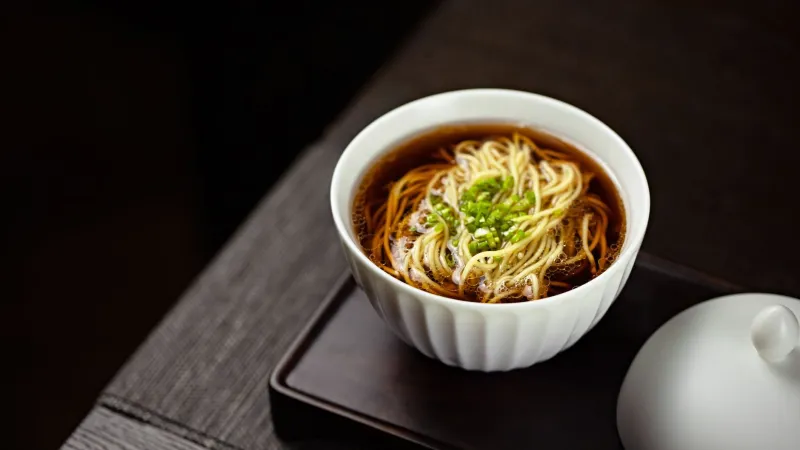
When you can taste the difference between a broth that's salty and one that's genuinely umami-rich, you start to notice which ramen shops are cutting corners and which ones are putting in the work. You start to appreciate why a bowl that looks simple on the surface — clear broth, minimal toppings — can be the most technically impressive thing on the menu.
Ramen culture in Japan is built on this kind of discernment. The more American diners develop it, the richer the conversation around ramen gets here too. And honestly? That's good for everyone — the chefs pushing the craft forward, and the rest of us lucky enough to be eating their work.
So the next time you sit down with a bowl, slow down. Put down your phone. Take a sip of broth before you add anything to it. Notice what it's doing in the back of your mouth, and how long it sticks around.
That's not just tasting ramen. That's finally hearing what it's been trying to tell you.