Every Bowl Has a Hometown: How Japan's Geography Shaped the Ramen You Love
There's a moment — you've probably had it — where you're halfway through a bowl of ramen and you stop, look down, and wonder: how did this even become a thing? The broth is doing something you can't quite explain. The noodles have a texture that feels intentional in a way that goes beyond recipe. Something about the whole combination feels like it was figured out over decades, not an afternoon.
That's because it was. Every major ramen style in Japan is, at its core, a product of place. Geography, climate, local agriculture, migration patterns, wartime economics — all of it got stirred into the pot. When you know the backstory, the bowl stops being just dinner and starts being something closer to a history lesson you can slurp.
Let's trace it back.
Shoyu: Tokyo's Urban Classic
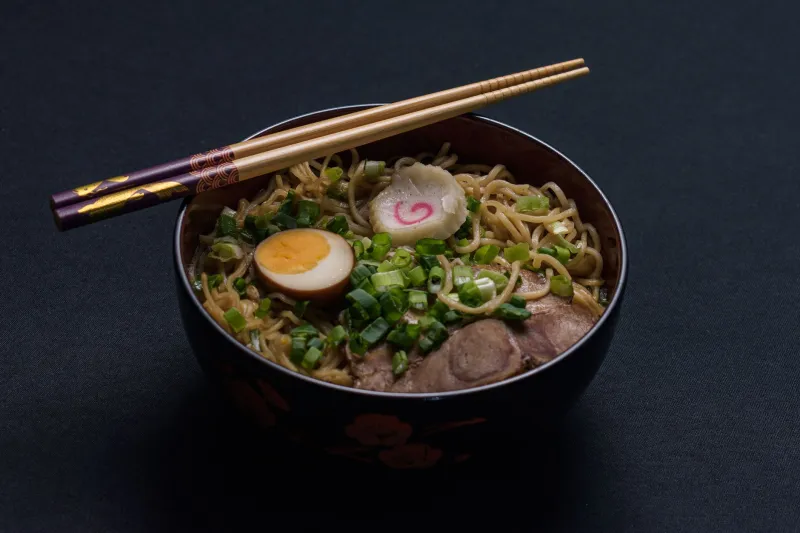
Shoyu ramen is where most people's ramen education begins, and it's no coincidence that it's the style most closely associated with Tokyo. The capital has always been a city of movement — merchants, workers, and eventually, post-WWII American influence all collided there. The style that emerged from that collision was built around soy sauce, which had long been central to Kanto-region cooking.
The broth is typically chicken or chicken-and-dashi based, seasoned with tare made from soy sauce, and it's deliberately lighter than what you'd find in western Japan. Tokyo's dense urban population needed food that was fast, satisfying, and easy to replicate at scale. Shoyu ramen delivered all three. The noodles tend to be thin and slightly wavy — designed to grab just enough broth without weighing down the bowl. It's a style that reflects the city it came from: efficient, refined, deceptively complex.
Tonkotsu: Fukuoka's Accidental Legend
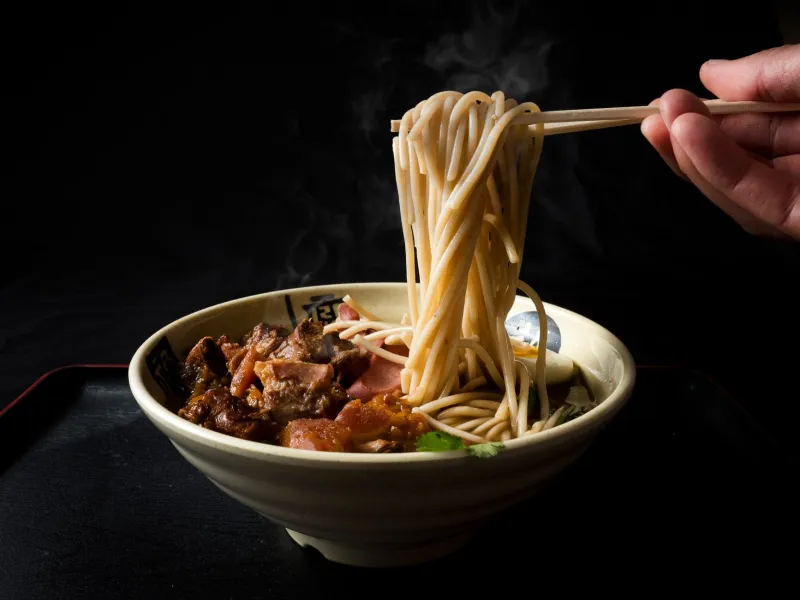
Fly to the opposite end of the country — culturally and geographically — and you land in Fukuoka, the port city on Kyushu that gave the world tonkotsu. The story goes that the style originated in the 1940s in the Hakata district, where a ramen vendor allegedly over-boiled his pork bone broth and discovered that the long, high-heat cook produced something rich, milky, and almost impossibly deep in flavor.
Kyushu has a strong pork farming tradition, and Hakata's position as a trade hub meant access to ingredients that other regions didn't always have. The result was a broth that's fundamentally different from anything made in Tokyo — opaque, fatty, intensely savory, built for a city of dock workers and merchants who needed serious fuel. The noodles are thin and straight, specifically engineered to cook fast and hold up in that heavy broth without going mushy. Many Fukuoka shops still let you order kaedama — a fresh serving of noodles to drop into your remaining broth — which tells you everything about how seriously they take the noodle-to-broth relationship there.
Miso: Sapporo's Cold-Weather Answer
Hokkaido is Japan's northernmost main island, and if you've ever spent a winter there, you understand immediately why miso ramen exists. The climate is brutal. Temperatures drop hard, snow is relentless, and the local diet evolved around ingredients that could survive and thrive in that environment — including fermented soybean paste, which Hokkaido produces in abundance.
Sapporo miso ramen emerged in the late 1950s and early 1960s, reportedly developed at a restaurant called Aji no Sanpei whose owner started experimenting with miso as a tare base. The broth is thick, warming, and built to hold heat longer than thinner styles — practical in a city where you might be eating outside in subzero temperatures. Corn and butter, both major Hokkaido agricultural products, became iconic toppings. The noodles are thick and curly, designed to trap that dense broth in every coil. It's a bowl that makes complete sense the moment you understand where it was made.
Shio: The Quiet Sophistication of Hakodate
Shio — salt-based ramen — is the oldest style, and it's the one that American ramen fans sometimes overlook because it lacks the visual drama of tonkotsu or the depth of miso. That's a mistake. Hakodate, a port city also in Hokkaido, is considered the spiritual home of shio ramen, and its restraint is the whole point.
Hakodate's history as an international trading port meant that Chinese culinary influence arrived there early, and the clear, delicate broths that came out of that exchange became the foundation of shio ramen. The seasoning is salt — but not just any salt, and not in any amount. The craft is in the subtlety. A good shio broth is usually made with chicken, seafood, or a combination of both, and the clarity of the liquid is a direct reflection of the cook's skill. There's nowhere to hide in a bowl of shio. It's the style that ramen masters often say is the hardest to get right.
Tsukemen: Tokyo's Modern Reinvention
Not every ramen style is ancient. Tsukemen — where the noodles are served separately and dipped into a concentrated broth — was developed in Tokyo in the 1960s by a chef named Kazuo Yamagishi at a shop called Taishoken in the Higashi-Ikebukuro neighborhood. The story is that he started eating his noodles dipped in broth as a staff meal, customers noticed, and it eventually became a menu item.
What's interesting about tsukemen is that it's a style born from urban ingenuity rather than regional agriculture. Tokyo's postwar food culture was full of improvisation, and tsukemen is a product of that creative restlessness. The dipping broth is usually much more intense than a standard ramen broth — it has to be, because the noodles aren't sitting in it, just passing through. The noodles themselves are typically thicker and chewier than standard ramen noodles, built to stand up to repeated dipping. It's a Tokyo invention through and through.
The Regional Styles You Haven't Tried Yet
Beyond the big four, Japan's ramen map gets genuinely wild. Kitakata in Fukushima Prefecture is famous for flat, wide noodles and a gentle soy-and-pork broth. Wakayama in Kii Peninsula produces a style that blends tonkotsu and soy sauce in a way that doesn't quite fit either category. Onomichi in Hiroshima Prefecture floats pork back fat on top of a soy-based broth, giving it a richness that sneaks up on you. Asahikawa, also in Hokkaido, makes a double-soup style that combines animal and seafood stocks in a way that's entirely its own thing.
These styles rarely make it to American menus, but they're worth hunting for — and worth knowing about, because they're proof that ramen's regional diversity goes much deeper than the four names most people recognize.
Why It Matters What You're Eating
Knowing the origin of your ramen doesn't make it taste better, exactly. But it does make the experience richer. When you understand that a bowl of Sapporo miso was essentially engineered to keep a person warm in a Hokkaido winter, or that Hakata tonkotsu came out of a port city's working-class food culture, the bowl becomes part of a larger story.
Ramen isn't just a dish. It's a record of where people lived, what they had access to, and what they needed from their food on any given day. That's the thing about regional cooking anywhere in the world — the geography is always in the bowl, whether you're looking for it or not.
Next time you sit down to a bowl, take a second before you dig in. Ask yourself: where did this come from? The answer is usually more interesting than you'd expect.