The $10 Bowl That Beats the $30 One: Why Humble Ramen Shops Win the Flavor Game
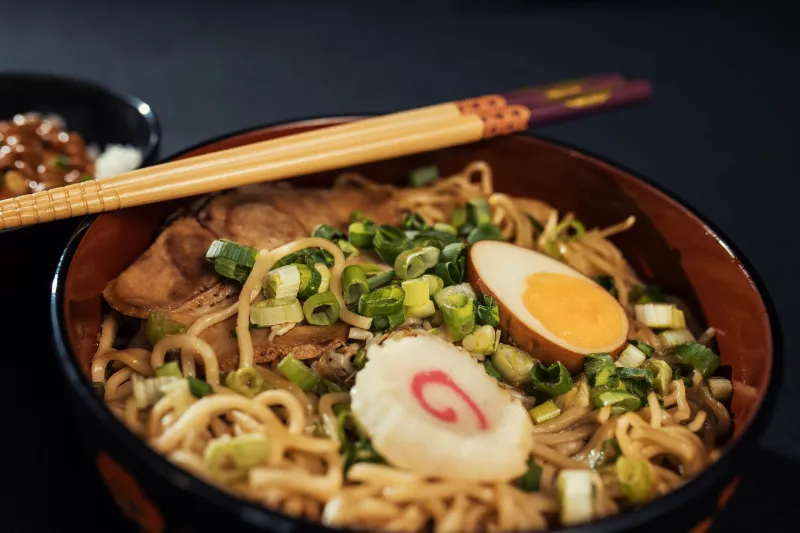
There's a moment every serious ramen eater knows. You're sitting at a plastic stool, fluorescent light humming overhead, steam rising from a bowl that cost you less than a cocktail at the place next door — and it's the best thing you've eaten all month. Then, a week later, you drop thirty bucks at some sleek ramen concept with a curated playlist and a beverage pairing menu, and you leave feeling vaguely cheated.
This isn't a coincidence. It's not nostalgia, and it's not some romantic attachment to hole-in-the-wall aesthetics. There's something real happening in those modest bowls, and it's worth understanding why.
Price Tags Don't Season Broth
Let's get the obvious out of the way first: expensive ingredients don't automatically equal better flavor. Food scientists have been saying this for years, but ramen culture makes the point unusually clearly.
Dr. Kenji Matsuda, a food chemist who has consulted for several Japanese restaurant groups, puts it plainly: "Broth complexity comes from time, temperature management, and the Maillard reaction — not from the cost of your bones. A shop using inexpensive pork trotters that has been running the same recipe for twenty years will almost always produce a more layered broth than a newcomer using premium wagyu bones without that accumulated knowledge."
The science backs him up. The glutamates, nucleotides, and fatty acids that make broth taste rich and satisfying are the product of long, careful extraction. You can't buy your way to that. You have to cook your way there.
The Repetition Advantage
Here's what the neighborhood shop has that the upscale restaurant usually doesn't: ruthless, obsessive repetition.
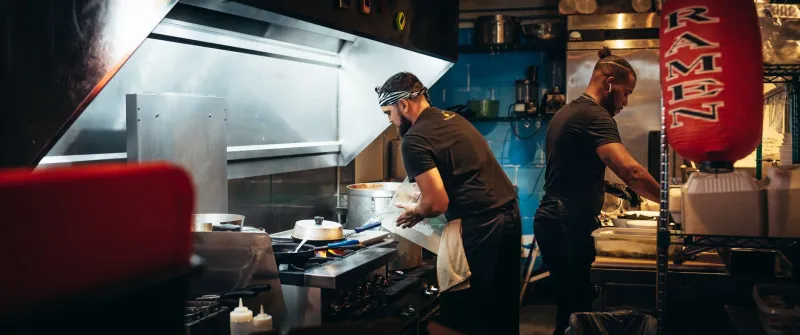
That little ramen-ya that's been operating out of the same 12-seat spot in a strip mall for fifteen years has made the same broth thousands of times. The cook doesn't need to measure anymore. They know by the color of the surface fat, by the way the steam behaves, by a smell they couldn't even describe to you, whether the broth is right. That kind of intuitive mastery is genuinely hard to replicate, and it has nothing to do with budget.
High-end restaurant kitchens, on the other hand, often deal with staff turnover, rotating menus, and the pressure to innovate constantly. Those are real obstacles to the kind of deep, repetitive practice that builds an exceptional broth.
Chef Marcus Yee, who spent time training in Fukuoka before opening a casual ramen counter in Chicago, describes it this way: "The best bowl of tonkotsu I ever had was from a guy who had been making the same recipe since 1987. He wasn't trying to impress anyone. He was just maintaining something he'd already perfected. That's a completely different energy than a restaurant trying to justify a premium price point."
The Umami Myth of Premium Ingredients
Americans tend to assume that if something costs more, it must taste more. In a lot of food categories, that's at least partially true. But ramen broth operates by different rules.
The umami depth that makes a great broth so craveable comes from specific chemical compounds — glutamate from kombu or dried sardines, inosinate from chicken or pork bones, guanylate from dried mushrooms. What matters is how those compounds are coaxed out of ingredients, not how much the ingredients cost at wholesale.
In fact, some of the most umami-rich ingredients in the Japanese pantry are remarkably inexpensive: dried niboshi (small sardines), chicken backs, pork neck bones. These aren't luxury items. They're humble, widely available, and extraordinarily effective when handled correctly.
The high-end ramen restaurant that sources heritage-breed pork and charges accordingly isn't necessarily wrong — but they're betting that premium sourcing will compensate for other variables. The neighborhood shop that has spent a decade calibrating the exact ratio of niboshi to kombu in their tare has a different kind of advantage, one that money can't easily replicate.
What "Craveable" Actually Means
Food psychologists use the word "craveable" deliberately. It describes food that doesn't just taste good in the moment but lodges itself in your memory and pulls you back. And craveability, it turns out, isn't always about complexity or refinement.
Some research suggests that modest, consistent environments actually enhance flavor perception — that eating in a low-key setting, without the cognitive load of a designed dining experience, allows you to focus more completely on what's in the bowl. The fancy restaurant, with its Instagram-worthy presentation and ambient lighting, is competing with the food for your attention.
The plastic-stool spot isn't competing with anything. It's just the broth.
The Tare Factor
One underappreciated reason neighborhood shops often win: their tare — the seasoning concentrate added to the broth — is frequently older and more developed than anything a newer establishment has access to.
Some traditional Japanese ramen shops maintain what's called a "continuing tare," a base that is never fully used up but constantly replenished, accumulating flavor over months or years the way a sourdough starter develops character over time. This practice is rare in American ramen culture, but not unheard of. A shop that's been operating long enough to develop a seasoned tare has a flavor asset that simply cannot be purchased.
That's not something a premium ingredient list can replicate. It requires time, continuity, and commitment — the exact qualities that define a neighborhood institution.
So What Should You Actually Be Looking For?
None of this means expensive ramen is bad or that you should avoid ambitious, high-concept shops. There are genuinely excellent bowls at every price point. But if you're trying to find the most memorable ramen in your city, a few signals are more reliable than price:
Longevity. A shop that has been open for five or more years and is still busy has almost certainly refined its recipe in ways a newer place hasn't had time to.
A short menu. Shops that make two or three things tend to make those things extremely well. Extensive menus often signal divided focus.
A consistent crowd. Not a trendy crowd — a regular crowd. People who come back on Tuesday afternoons are telling you something important.
Steam and noise. A busy, loud, steamy ramen counter is usually cooking at high volume, which means the broth is cycling constantly and staying fresh. A quiet, elegant ramen restaurant might be holding broth for longer than ideal.
The Deeper Lesson
Ramen has always been working-class food. It was built in Japan by and for people who needed something filling, warming, and affordable. The soul of the dish is in that history, and the best bowls — wherever you find them, at whatever price — tend to honor it.
The paradox isn't really a paradox once you understand what actually makes broth great. It's repetition. It's time. It's the accumulated knowledge of someone who has been making the same thing long enough to stop thinking about it consciously.
That's not something you can price into a menu. And honestly? That's what makes ramen so endlessly worth chasing.