Breaking the Broth Barrier: The Women Chefs Transforming American Ramen
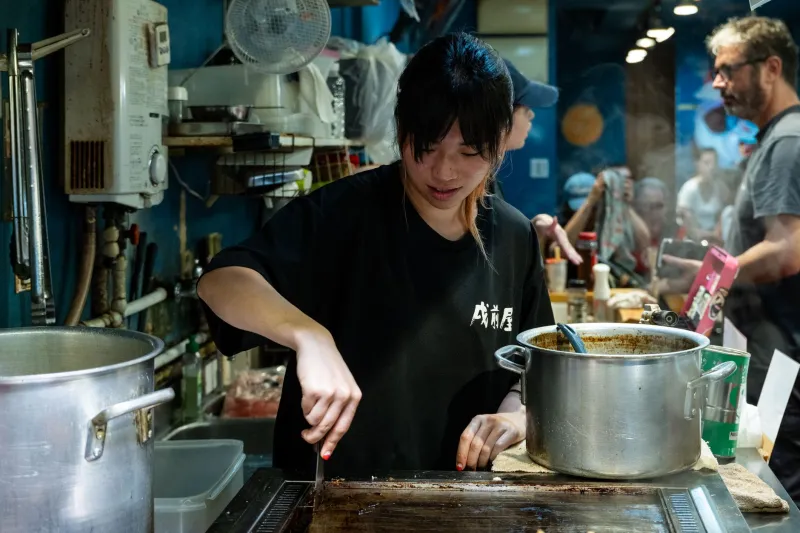
Walk into most celebrated ramen shops in Japan and you'll find the same thing behind the counter: men. The image of the ramen master — gruff, devoted, almost monastic in his dedication to a single bowl — is so culturally ingrained that it's practically part of the mythology. American ramen culture imported a lot from Japan. That particular tradition was one of them.
But something is shifting. Across the US, a growing number of women are opening ramen restaurants, running serious noodle programs, and earning the kind of recognition that used to flow almost exclusively to their male counterparts. And they're doing it without abandoning the depth and discipline that makes ramen worth caring about — they're just bringing something new to the table alongside it.
A Tradition Worth Questioning
To understand why this moment matters, it helps to understand how male-dominated ramen culture got so entrenched in the first place. In Japan, ramen shops historically operated as small, owner-run establishments where long hours and physical endurance were treated as prerequisites — and where the assumption, rarely examined, was that men were better suited to the work. Women who did cook ramen often did so in the back, without credit.
When ramen landed in the US and started attracting serious culinary attention in the 2000s and 2010s, American chefs and restaurateurs largely absorbed those cultural norms along with the recipes. The first wave of celebrated American ramen — Ivan Orkin's New York shops, David Chang's early Momofuku work — was almost entirely male-led. That wasn't necessarily intentional. It was just the water the culture swam in.
But American food culture has always been a little more willing to question inherited assumptions than its Japanese counterpart. And that willingness is creating space.
Profiles in Broth
In Portland, Oregon, a chef who spent years cooking French cuisine before falling hard for Japanese noodles now runs a ramen counter that's earned consistent praise for its shio ramen — a style that demands restraint and precision in a way that showy tonkotsu doesn't. Her broth is built on dashi foundations with multiple layered fish elements, and she talks about it the way a winemaker talks about terroir: as something that reflects specific choices made at every stage.
"People sometimes assume shio is simple because it's clear," she said in a recent interview. "It's the opposite. There's nowhere to hide. Every element has to be right."
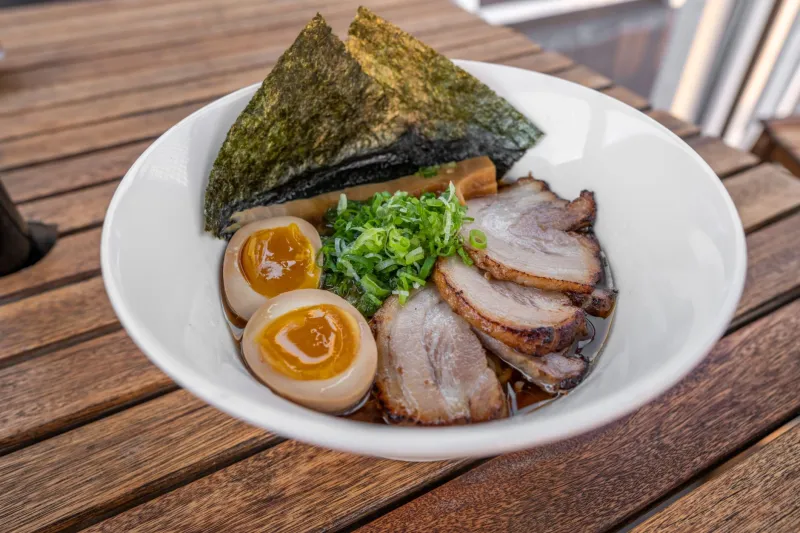
In Chicago, a Japanese-American chef who grew up eating her grandmother's homemade noodles opened a ramen shop that has become one of the city's most-talked-about spots — not because it chases trends, but because it doesn't. Her tori paitan (cloudy chicken broth) ramen draws on techniques she learned partly from family and partly from an extended research trip through regional Japan. The noodles are made in-house. The tare is obsessively calibrated. And the chashu is braised low and slow in a way that takes all day.
"I think there's sometimes an assumption that women will bring a 'softer' approach to ramen," she said. "What I actually brought was stubbornness. I wanted to do it right, and doing it right takes time."
In Los Angeles — arguably the US city with the deepest Japanese food culture — a Taiwanese-American chef is running a ramen program inside a larger Japanese restaurant concept that's quietly become a destination for noodle obsessives. Her specialty is a mazemen (brothless ramen) that draws on Taiwanese flavor influences without losing its Japanese structural roots. It's the kind of dish that could easily tip into fusion gimmickry. It doesn't, because she knows the tradition well enough to know exactly what she's departing from.
What Changes When Women Lead
It would be easy — and reductive — to say that women bring "warmth" or "nurturing" to ramen in ways that men don't. That kind of framing just swaps one set of stereotypes for another. The reality is more interesting.
What several of the women leading serious ramen programs in the US share isn't a softened aesthetic. It's a willingness to approach the dish without ego — to treat it as a craft to be learned rather than a legacy to be performed. That shows up in how they build their menus (thoughtfully, without the need to prove something through sheer broth intensity), how they run their kitchens (collaboratively, in most cases), and how they talk about the food.
It also shows up in business model choices. Several female-led ramen concepts have opted for counter-service formats, smaller footprints, and tasting-menu-style approaches that prioritize quality over volume. These aren't compromises — they're intelligent adaptations to the realities of running a food business in the US in 2024.
Honoring Tradition While Expanding It
One thing that stands out when you talk to these chefs is how seriously they take classical Japanese technique. None of them are trying to blow up ramen or reinvent it from scratch. They've studied the regional styles — Sapporo miso, Hakata tonkotsu, Tokyo shoyu — and they understand what makes each of them work on a technical level.
The creative departures they make come from that foundation. A shio tare that incorporates fermented black garlic. A broth that uses smoked dashi components for a subtle depth. A noodle with a slightly higher hydration percentage that holds up better to a rich, fatty soup. These are the moves of people who know the rules and have earned the right to bend them.
That's exactly what ramen culture — in Japan and in the US — has always needed. Not revolution for its own sake, but evolution grounded in respect for what came before.
The bowls being produced by women chefs across the country right now aren't just good for what they represent. They're good, full stop. And that's the only argument that ultimately matters.