The 72-Hour Lie: Why Your Ramen Broth Stops Getting Better Long Before You Stop Cooking

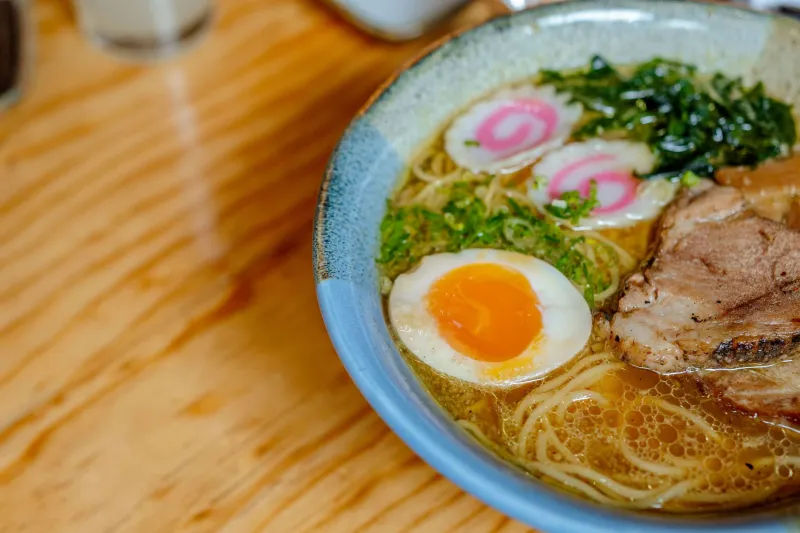
Photo by Photo by Jez Timms on Unsplash on Unsplash
There's a badge of honor in the home ramen world, and it looks something like this: a massive stockpot, a stove that's been running since Friday, and a cook who hasn't slept properly in two days. The longer the broth simmers, the better it must be. Right?
Not exactly.
This is one of the most deeply held myths in American ramen culture — and it's one that seasoned Japanese chefs have been quietly side-stepping for years. The truth about broth duration is more nuanced, more interesting, and honestly, a little humbling for anyone who's lost a weekend to a pot of pork bones.
What's Actually Happening Inside That Pot
Let's start with the chemistry. When you simmer bones, fat, and aromatics, you're triggering a cascade of reactions — collagen breaks down into gelatin, proteins denature and recombine, and glutamates (the building blocks of umami) are released into the liquid. In a tonkotsu-style broth, most of that collagen-to-gelatin conversion is largely complete within the first six to eight hours of a hard boil. Shoyu and shio broths, which tend to run lighter, often hit their structural peak even sooner.
After that initial window? The process doesn't stop — but the gains shrink fast.
Maillard reactions continue to deepen color and add complexity, sure. But the rate at which new flavor compounds are being introduced to the broth slows to a crawl. You're essentially maintaining a flavor profile rather than building a new one. And here's where your own biology becomes the problem.
Your Taste Buds Have a Memory — and It's Short
Umami saturation is a real phenomenon. When you're exposed to high concentrations of glutamates over an extended period — say, three days of tasting and adjusting a broth — your palate's sensitivity to those compounds actually decreases. Taste receptors that were firing enthusiastically on hour four are phoning it in by hour sixty.
This is part of why home cooks who commit to marathon broth sessions often find themselves adding more and more seasoning toward the end. The broth hasn't lost its flavor; you've just temporarily lost your ability to accurately perceive it. You're compensating for your own palate fatigue, not a genuine deficit in the pot.
Food scientists call this sensory adaptation. Chefs just call it getting too close to your own cooking.
What Japanese Ramen Shops Actually Do
Here's something that might reframe the whole conversation: most high-volume ramen shops in Japan aren't running 72-hour broths. They can't. The economics don't work, and frankly, the flavor math doesn't either.
A typical Hakata-style tonkotsu shop in Fukuoka runs its tare separately, builds a fresh batch of broth daily, and relies on a carefully managed blend of fresh and carried-over stock to achieve depth and consistency. The "old" broth seeded into each new batch acts as a flavor foundation — a technique sometimes called kaeshi in the context of soy tare — but the bulk of what goes in your bowl was made that morning.
The complexity you're tasting in a great bowl of ramen isn't the product of infinite time. It's the product of precise technique, quality ingredients, and a cook who knows exactly when to stop.
The Psychology of the Long Cook
So why do American home cooks keep reaching for the 48- and 72-hour mark? Part of it is cultural. We've absorbed a cooking mythology that equates effort with quality — if something took longer, it must be better. Slow food movements, overnight braises, weekend-long smoking sessions: they've all conditioned us to believe that patience is the ultimate ingredient.
There's also the influence of food media. Watching a chef spend three days on a broth makes for compelling television. It communicates dedication and craft. But what the camera doesn't show you is the experienced taster pulling a ladle's worth of broth at hour ten, nodding, and saying that's it.
The psychological commitment is real, too. Once you've invested a day and a half into a broth, admitting it peaked six hours ago feels like a loss. So you keep going. You convince yourself each additional hour is adding something. Often, it isn't.
Finding Your Broth's Actual Peak
The most useful thing you can do is build a tasting log the next time you make broth from scratch. Pull a small sample every two hours, let it cool slightly, and taste it blind if you can — have someone else label the cups. What you'll likely find is a clear arc: rapid development early on, a plateau somewhere in the middle, and then a long, flat stretch where not much is changing.
That plateau is your target zone. For most tonkotsu broths, it lands somewhere between eight and fourteen hours of active simmering. For lighter chicken or dashi-forward bases, you might hit it even earlier — sometimes around the four-to-six-hour mark.
Once you've located that window for your specific setup — your water, your bones, your heat source — you can stop chasing the clock and start cooking with intention.
Longer Isn't Mastery. Knowing When to Stop Is.
The real skill in broth-making isn't endurance. It's perception. The Japanese chefs who make transcendent bowls aren't the ones who cook the longest — they're the ones who've tasted enough broth over enough years to recognize the moment when the liquid has become exactly what it needs to be.
That kind of intuition takes time to develop, but it starts with a simple shift in mindset: trust your palate more than the clock. Give your taste buds a rest between samples. And next time someone asks how long your broth took, the honest answer might just be: exactly as long as it needed to.
Not a minute more.