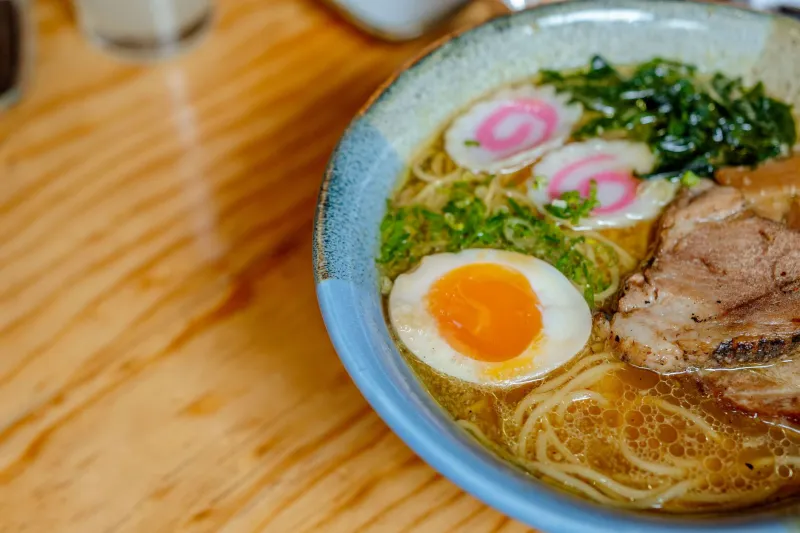
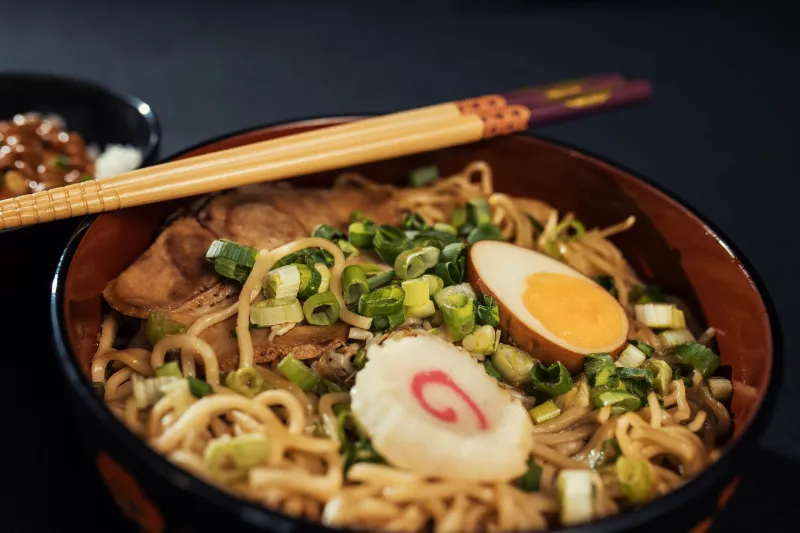
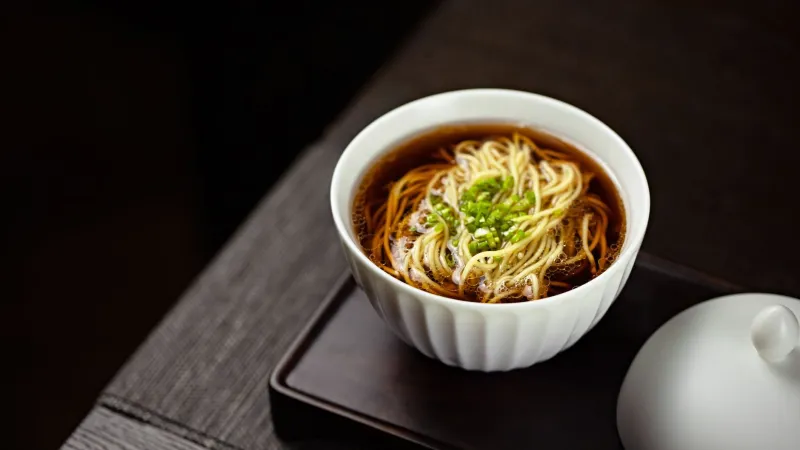
Black Garlic, Koji, and the Question Nobody Wants to Answer: Is American Ramen Still Authentic?
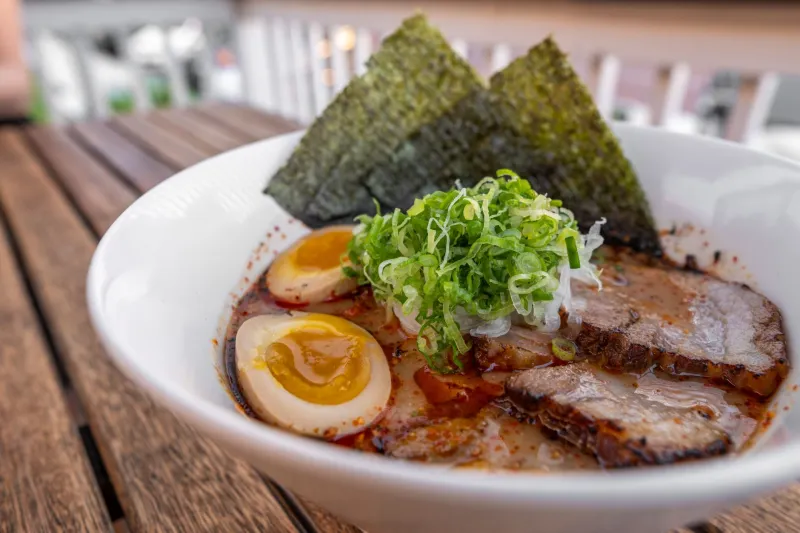
Walk into enough ramen shops in cities like Portland, Chicago, or Atlanta these days, and you'll start noticing something. The menus have gotten weirder. Not weird in a bad way — weird in the sense that you're suddenly seeing words you half-recognize from a Japanese grocery store visit you took three years ago. Mayu. Shio koji. Hatcho miso. Kurozu. These aren't fusion gimmicks. They're legitimate Japanese ingredients. But they're showing up in combinations and contexts that wouldn't exist in a traditional ramen shop in Sapporo or Hakata.
Something is happening in American ramen right now, and it's quiet enough that most diners haven't consciously noticed it yet. A generation of chefs who got serious about Japanese food are going deeper — past the obvious pillars of tonkotsu, shoyu, and shio — and pulling out ingredients that even many Japanese home cooks don't use regularly. The results are bowls that are genuinely fascinating and, depending on who you ask, either the next chapter of ramen's story or a slow drift away from everything that made it meaningful.
The Ingredients Leading the Charge
Let's start with black garlic oil, or mayu — a jet-black, intensely aromatic condiment made by charring garlic and blending it with oil. It's traditionally associated with Kumamoto-style ramen in southern Japan, where a drizzle of it over tonkotsu broth adds a smoky, slightly bitter edge that cuts through richness beautifully. For years, it was almost invisible in American ramen. Now it's everywhere, and not just on Kumamoto bowls. You'll find it floating on top of shio broths, stirred into tare, even used as a finishing oil for vegetarian ramen.
Koji is another one. If you're not familiar, koji is a mold — Aspergillus oryzae — that's been used in Japanese fermentation for centuries. It's what turns soybeans into miso, rice into sake, and fish into the funky, complex fermented pastes that underpin a lot of Japanese cooking. American chefs have been experimenting with shio koji (rice fermented with koji and salt) as a marinade for chashu pork, a seasoning agent for tare, and even as a broth additive. The results are genuinely different from anything you'd get with conventional seasoning — rounder, more complex, with a kind of enzymatic depth that's hard to describe but easy to taste.
And then there's miso. Not just any miso, but the deep end of the miso spectrum: aged hatcho miso from Aichi Prefecture, which ferments for up to three years and develops an almost chocolate-like intensity. Or the funky, regional varieties that most Americans have never encountered. Chefs are using these not as a base for miso ramen in the traditional sense, but as a layering tool — a small amount dissolved into tare, or whisked into a finishing butter, to add complexity without announcing itself.
The Purist Perspective
Not everyone is thrilled about this.
Takeshi Mori, who has been making ramen in Kyoto for thirty years and now consults for a handful of Japanese restaurants on the West Coast, is measured but clear about his concerns. "Ramen has always evolved," he says. "I understand that. But there's a difference between evolution that grows from understanding and novelty that grows from curiosity. When a chef uses mayu because they love Kumamoto ramen and want to honor that tradition, that's one thing. When they use it because it looks dramatic and photographs well, that's another."
His concern isn't really about the ingredients themselves — it's about the relationship between the cook and the ingredient. Traditional Japanese cooking places enormous emphasis on shokunin spirit, the idea that mastery comes from deep, patient study of a narrow craft. The worry is that American chefs, moving quickly through a wide range of techniques and ingredients, might adopt the aesthetics of Japanese culinary tradition without the underlying philosophy.
It's a fair point. And it's one that the more thoughtful chefs in this space take seriously.
The Innovator's Counter
Chef Priya Anand runs a ramen counter in Nashville that's developed a devoted following partly because of how unclassifiable it is. Her broth is built on a dashi base, but she ages her tare with shio koji for two weeks before service. Her chashu is marinated in a blend of hatcho miso and black garlic. Her menu doesn't claim to be traditional, and she's upfront about that.
"I spent two years eating ramen in Japan before I opened this place," she says. "I'm not pretending to be a Japanese chef. I'm a chef who loves Japanese food and wants to cook it as honestly as I can from where I stand. If I use koji, it's because I understand what it does and I think it makes the bowl better. That feels more respectful to me than copying a recipe I don't fully understand."
Her point touches on something important: authenticity in food has never been static. Ramen itself is a borrowed dish — noodles with Chinese origins, adapted over decades by Japanese cooks using local ingredients and techniques until it became something entirely its own. The tonkotsu that purists now defend as quintessentially Japanese was once a regional innovation that traditionalists of an earlier era probably found suspicious.
What's Actually Getting Lost — And What Isn't
The more useful question might not be whether American ramen is authentic, but whether it's good — and whether the people making it understand what they're working with.
When black garlic oil is used thoughtfully, it adds something real. When koji fermentation is applied with genuine understanding of what the mold is doing to proteins and starches, the results can be extraordinary. These aren't shortcuts or substitutions. They're extensions of a tradition that was always, at its core, about finding the most interesting way to make something delicious.
What does get lost, sometimes, is the discipline of simplicity. The best traditional ramen is an exercise in restraint — every element earning its place, nothing there for show. Some of the American bowls pushing into this new ingredient territory are genuinely brilliant. Others are using novelty as a substitute for mastery, stacking interesting components without a clear sense of what the bowl is trying to be.
The Honest Answer
Is American ramen authentic? It depends entirely on what you mean. If authentic means identical to what you'd find in a regional Japanese shop, then no — and it probably shouldn't be. If authentic means made with genuine understanding, real ingredients, and honest intention, then yes, some of it absolutely is.
The chefs using black garlic and koji and aged miso who are doing it right aren't diluting ramen culture. They're participating in it — messily, imperfectly, from a different cultural vantage point. That's not so different from what Japanese cooks were doing a hundred years ago when they first started playing with Chinese noodles and wondering what would happen if they added pork bones.
Ramen has always been a living thing. The question isn't whether it changes. It's whether the people changing it are paying attention.