Why More Is Killing Your Broth: The Umami Overload Problem Nobody Talks About
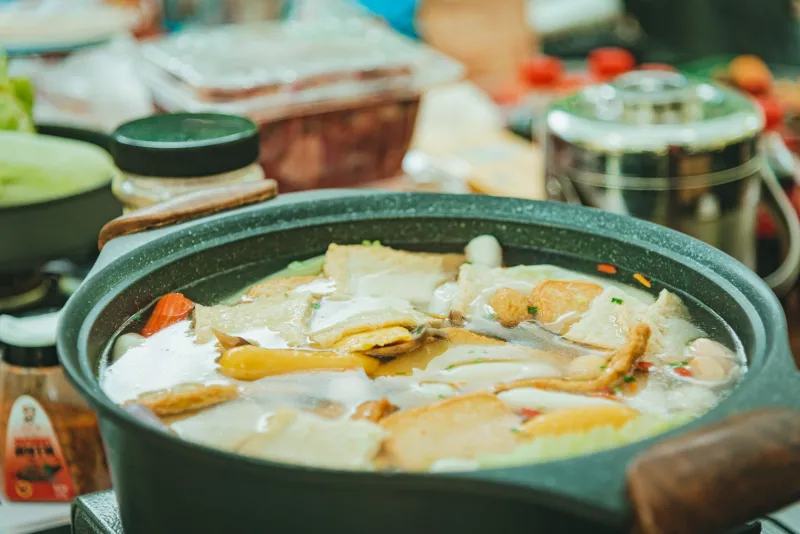
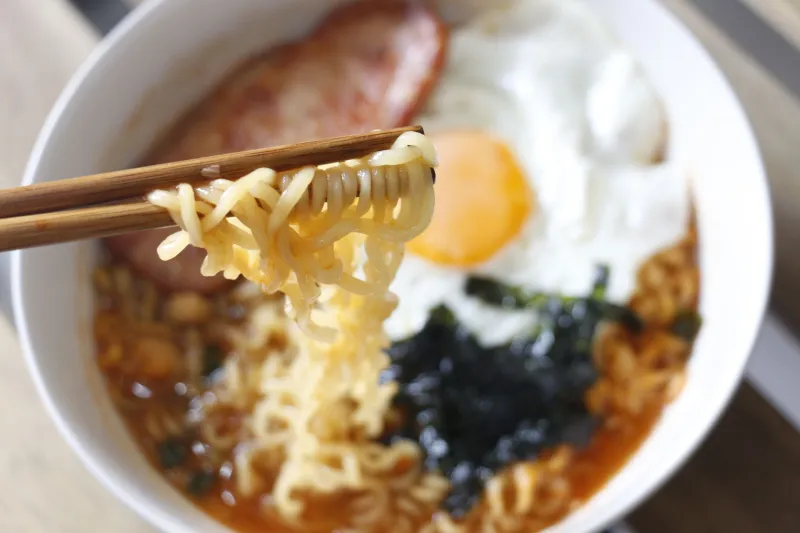
There's a moment most home ramen cooks know well. You've been simmering your broth for hours. You taste it, and something feels off — flat, somehow, or weirdly indistinct. So you reach for the kombu. Then the dried shiitake. Then a splash of soy, a spoonful of miso, maybe some fish sauce because why not. And the broth gets... worse. Not dramatically worse. Just muddier. Less like itself.
Welcome to the umami trap.
It's one of the most common mistakes serious home cooks make, and it's almost never talked about directly. The assumption is that umami — that savory, mouthwatering fifth taste — is always a good thing in larger doses. More umami equals more depth. More depth equals a better bowl. Except that's not how it works at all.
What Umami Actually Is (And Why It Has Limits)
Umami is primarily driven by glutamate, an amino acid that occurs naturally in a huge range of ingredients: kombu, bonito flakes, dried mushrooms, aged cheeses, tomatoes, miso, soy sauce, chicken bones, pork, and more. When glutamate binds to taste receptors on your tongue, it creates that lingering, savory satisfaction we associate with a great bowl of ramen.
But here's the thing — your taste receptors can get saturated. Dr. Kiyoshi Tanimura, a food chemist who has studied Japanese broth composition for over two decades, describes it this way: "Glutamate receptors respond strongly at low concentrations, but the signal flattens out as concentration increases. Beyond a certain threshold, you're no longer tasting more umami. You're tasting noise."
Noise is exactly the right word. When too many umami compounds compete for the same receptors, the individual flavors stop registering distinctly. The broth loses its voice. What should be a conversation between kombu and pork bones becomes a room full of people all talking at once.
The Stacking Problem
American home cooks are particularly vulnerable to what we might call umami stacking. It's partly cultural — we're trained to build flavor by adding things, not removing them. And ramen, with its reputation as a complex, layered dish, seems to invite that instinct.
The problem is that many of the most popular ramen add-ins are already loaded with glutamate. Dried shiitake mushrooms are extraordinarily high in it. So is kombu. Bonito flakes. Miso paste. Soy sauce. Chicken carcasses. Pork trotters. Each one is a legitimate, wonderful ingredient on its own. But pile them all into a single pot and you're not building complexity — you're building confusion.
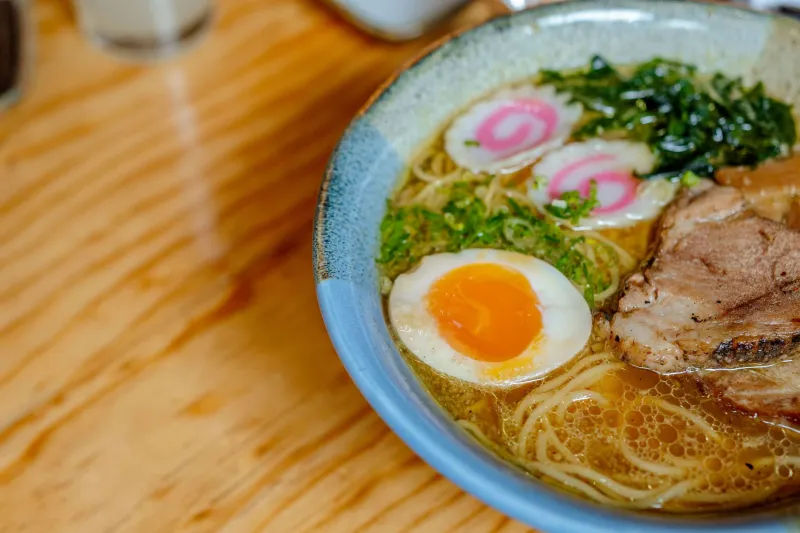
Chef Haruki Sato, who runs a small ramen consultation practice in Los Angeles and trained in Fukuoka for six years, puts it bluntly: "The Japanese approach is subtraction, not addition. A great tonkotsu broth tastes like pork. That's it. That's the whole point. When someone adds ten things trying to make it taste like more, it ends up tasting like nothing."
Before and After: What Overloaded Broth Actually Tastes Like
To understand the difference concretely, consider a simple experiment. Take a basic chicken broth — clean, slightly sweet, clearly chickeny. Now add kombu, dried shiitake, a splash of soy sauce, a spoonful of white miso, and a handful of bonito flakes. Simmer it all together.
Taste it. It's savory, sure. It might even seem impressive at first. But notice what's missing: the brightness of the chicken. The subtle sweetness. Any individual note you could point to and say, "that's what I'm tasting." The broth has become a wall of savory, with no architecture behind it.
Now pull back. Start with just the chicken and the kombu. Taste it. There's a clarity there — the kombu amplifies the chicken's natural glutamate without drowning it. Add the bonito flakes at the very end and pull them quickly. Taste again. That's depth. That's what the Japanese call umami no chowa — umami harmony.
The Synergy Trap
There's a layer of complexity here that makes this even trickier. Glutamate doesn't work alone. It synergizes with two other compounds — inosinate (found in meat and fish) and guanylate (found in dried mushrooms) — to dramatically amplify perceived umami. When you combine even small amounts of all three, the effect can be eight times stronger than any single compound on its own.
This is why dashi — the foundational Japanese broth made from kombu and bonito — tastes so much more complex than either ingredient alone. It's also why adding dried shiitake to an already meat-heavy broth can push things over the edge almost instantly. You're not just adding more umami. You're triggering a multiplier effect.
The practical takeaway: when you're building a broth, think in terms of categories. Pick your glutamate source (kombu, miso, soy). Pick your inosinate source (pork, chicken, bonito). If you want guanylate, use dried mushrooms — but use them as a supporting player, not a co-star. One from each column is almost always enough.
How to Pull Back Without Starting Over
If your broth already tastes muddy, there are a few ways to rescue it without starting from scratch. The simplest is dilution — adding unseasoned stock or even plain water to lower the overall glutamate concentration. It feels counterintuitive, but it works.
Acid is another tool. A small splash of rice vinegar or a squeeze of yuzu juice can cut through umami overload by introducing brightness that the palate can latch onto. It won't reduce the glutamate, but it rebalances the flavor profile so the broth feels less like a wall and more like a bowl.
Finally, fat. A swirl of good-quality lard or chicken schmaltz added at the end creates a coating effect on the palate that softens aggressive umami and gives the broth a sense of roundness. This is part of why restaurant broths often feel more cohesive than home versions — the fat content is usually higher, and it's doing quiet, important work.
The Restraint Principle
At the end of the day, the umami trap is really a lesson about restraint — which is, not coincidentally, one of the core principles of Japanese cooking. The goal isn't to cram as much flavor as possible into a pot. It's to find the minimum number of ingredients that create maximum clarity.
The best ramen broths you'll ever taste are almost always built on a surprisingly short ingredient list. What makes them extraordinary isn't volume — it's precision. Every element has a job, and nothing is there just to add more.
Next time your broth tastes flat, try taking something out before you add anything new. You might be surprised how much better it gets.