Same Recipe, Totally Different Bowl: The Real Reasons Your Homemade Broth Can't Quite Match the Restaurant
Let's be honest about something that doesn't get talked about enough in home cooking circles: you can follow a ramen broth recipe to the letter — same bones, same aromatics, same timing — and still end up with something that tastes noticeably less impressive than what you'd get at a good ramen shop. It's frustrating. And it's also completely normal.
This isn't a skill problem. It's a systems problem. Restaurants have structural advantages that home kitchens simply don't replicate, and understanding those gaps is actually the first step toward closing them. So let's dig in.
The Burner Situation Is Bigger Than You Think
Most American home stoves top out somewhere between 12,000 and 18,000 BTUs per burner. A commercial kitchen burner? Easily 30,000 to 150,000 BTUs. That difference isn't just about speed — it fundamentally changes what happens inside your pot.
For tonkotsu broth specifically, that aggressive, rolling boil is what causes the collagen and fat to emulsify into that signature creamy, opaque texture. At lower heat, you get a gentler simmer that produces a cleaner, lighter broth — which is fine for some styles, but it's not tonkotsu. At home, you're often fighting your own equipment just to get the reaction you want.
What you can actually do: Push your burner to its highest setting during the critical emulsification window — usually the first two to three hours for tonkotsu. Use a heavy-bottomed pot that retains heat well. And don't be afraid to use a stockpot that's slightly smaller than you think you need; a fuller pot holds temperature more consistently when you're lifting lids and adjusting things.
Ingredient Volume Changes Everything
Restaurants aren't making broth in a six-quart pot. They're working in batches of ten, twenty, sometimes fifty gallons at a time. That scale matters in ways that aren't immediately obvious.
First, more bones mean more surface area for collagen extraction — and more gelatin means a richer, more body-forward broth. Second, large batch cooking creates its own kind of momentum. The thermal mass of a giant pot of simmering liquid stays more consistent, recovers faster after you add cold ingredients, and loses less water proportionally to evaporation.
When you scale that same recipe down to home-cook quantities, you're working against all of those dynamics at once.
What you can actually do: Go bigger than the recipe calls for, even if you don't need the volume. Make a double batch and freeze half. More bones in the pot — even if you're not doubling the water — will noticeably improve body and depth. Many serious home ramen cooks in the US have started sourcing pork trotters or chicken feet specifically to boost gelatin content in smaller batches.
The Tare Is Doing More Work Than You Realize
Here's a thing that surprises a lot of people: the broth itself is only part of what makes a restaurant bowl taste the way it does. Tare — the concentrated seasoning sauce that gets added to each individual bowl just before serving — is where a huge amount of flavor complexity lives.
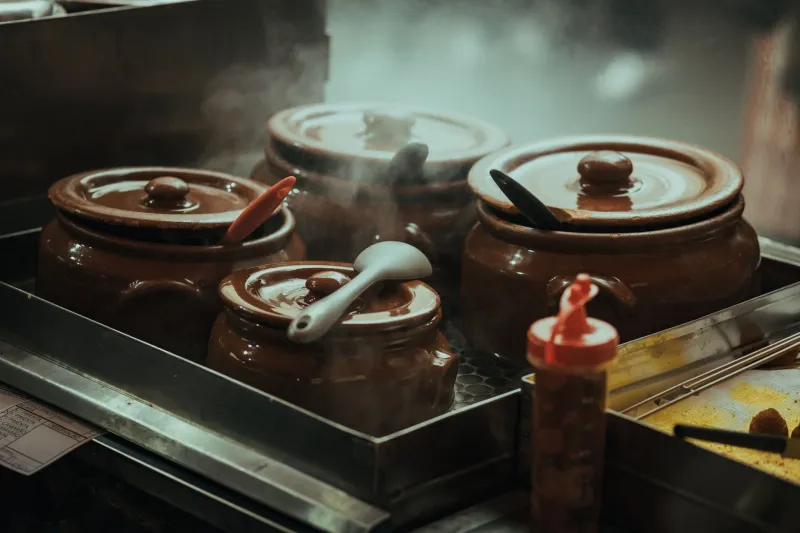
At a ramen shop, the tare might have been developing for years. Shoyu tare at established spots in cities like New York or LA is sometimes described as a "mother sauce" — constantly refreshed, never fully replaced. That kind of layered, aged complexity is genuinely hard to manufacture quickly at home.
Beyond that, restaurant cooks are adjusting tare ratios by instinct, tasting every bowl before it goes out. Most home recipes give you a fixed ratio and call it done.
What you can actually do: Make your tare separately and in advance — even a few days ahead dramatically improves the result. Taste and adjust the ratio in each bowl individually rather than mixing in bulk. And consider keeping a small jar of tare in your fridge that you add to over time, building complexity with each batch.
The Psychological Factor Nobody Talks About
This one's a little uncomfortable, but it's real: context changes how food tastes. There's actual science behind this. The ambient environment of a restaurant — the sounds, the smells, the presentation, the fact that someone else made it — all influence your sensory perception of the food itself.
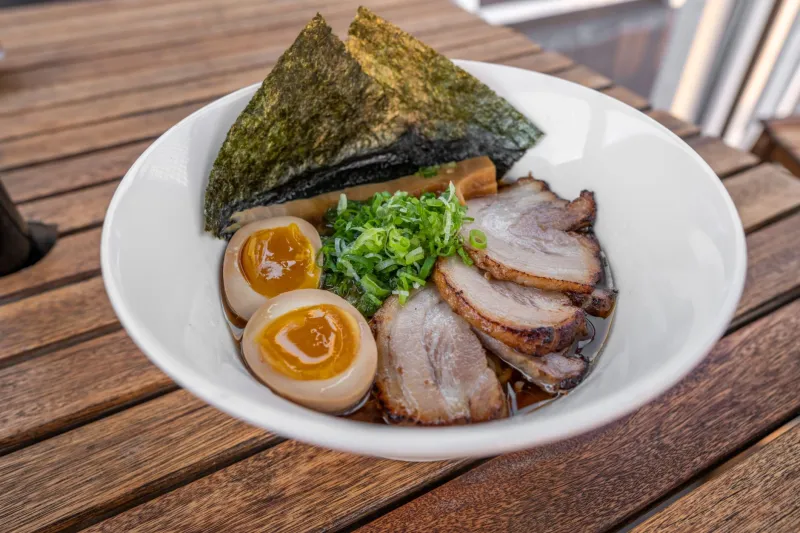
When you cook at home, you've been smelling that broth for six hours. You're tired. You know exactly what went into it, including the moment you accidentally let the heat drop. You're eating it at your kitchen table instead of a low-lit counter with a perfect arrangement of nori and soft-boiled eggs in front of you.
None of that means your broth is worse. But your brain is processing it differently.
What you can actually do: Plate your ramen with real intention. Warm your bowls. Set the table. Put your phone away. These aren't precious restaurant affectations — they're legitimate ways to give your brain the context it needs to appreciate what you actually made.
Timing Precision: The Part Home Recipes Gloss Over
Restaurant ramen cooks do the same thing every single day. They know exactly what their broth looks and smells like at the two-hour mark versus the four-hour mark. That calibration takes repetition to develop, and most home cooks are starting from scratch every time.
Recipes will tell you to simmer for six to eight hours. But what does "done" actually look like? What's the visual cue that the collagen has fully broken down? What does the broth smell like when it's ready versus when it's gone slightly too long?
What you can actually do: Keep notes. Seriously — even just a few lines in your phone about what you tried, what time you started, what the broth looked like at various stages, and what you'd change next time. Home ramen cooking rewards iteration more than almost any other dish. The cooks who get genuinely great results aren't necessarily more talented; they've just made it enough times to know what they're looking for.
You're Closer Than You Think
Here's the encouraging part: the gap between a solid home broth and a restaurant-quality one is real, but it's not enormous. Most of it comes down to heat management, ingredient ratios, tare development, and repetition — none of which require professional equipment or a trip to a Japanese import warehouse.
The ramen shops you love most probably went through the same process of iteration and adjustment before they got their broth where it is today. You're doing the same thing, just in a smaller kitchen. Keep going.